To replenish kidney essence, never neglect nourishing qi and blood— one simple formula restores the body's vital essence, qi, and blood.
Our ancestors said, "Essence and blood share the same origin; qi generates blood and nourishes it." This principle holds especially true today.Have you noticed how some people see temporary relief from kidney-tonifying herbs, only to revert to their original state once they stop taking them? It's like pouring water into a leaky bucket—without plugging the holes, you'll never keep it full. In truth, kidney essence and vital energy are like three strands twisted into a rope; if any one is missing, the whole thing loses its strength. Today, I'll share an ancient formula with just three common herbs that comprehensively replenish essence, energy, and blood all at once.
The first ingredient is Psoralea corylifolia, a seasoned veteran in kidney tonification. Traditional Chinese medicine states that "the kidneys govern the bones and produce marrow." Insufficient kidney yang is like a firebox lacking sufficient heat; Psoralea corylifolia acts like adding coal to the furnace, reigniting the vital fire within. It's especially suitable for those who experience cold hands and feet in winter, weakness in the lower back and legs, and lack of energy when walking.For elderly individuals with osteoporosis, traditional Chinese medicine attributes this to depleted kidney essence leading to hollow bone marrow. Psoralea can effectively replenish and solidify the bone marrow. However, note that this herb has a warming nature, so those prone to internal heat should use it in combination with other ingredients.
The second ingredient, Poria, may look as plain and white as a block of tofu, but its ability to replenish qi is remarkable. Traditional Chinese medicine states that "the spleen is the source of qi and blood production." The spleen and stomach function like a household rice bin. Poria can patch up any holes in the bin and even increase its capacity.For those who feel drowsy after meals, speak weakly, or have a sallow complexion, it's often due to spleen deficiency and insufficient qi. Pairing Poria with Chinese yam and Atractylodes is like installing a pump for the spleen and stomach—naturally boosting qi and blood.
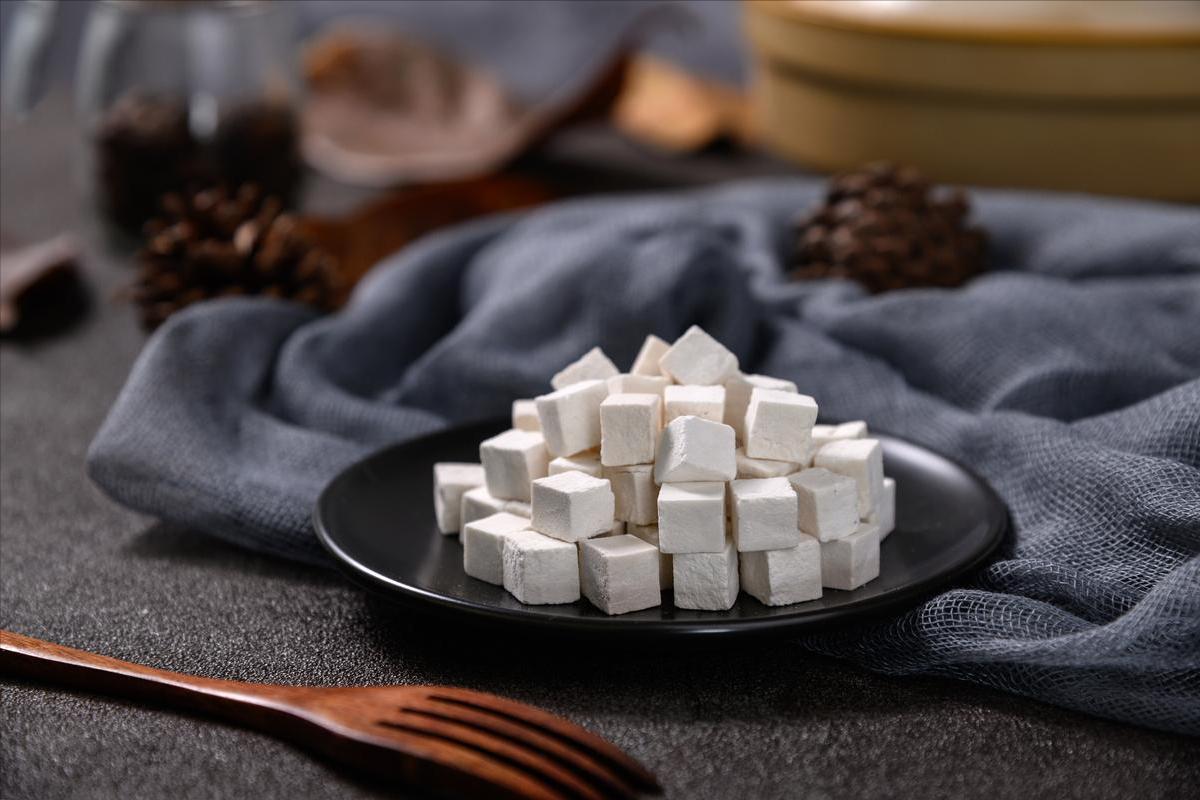
The third ingredient is myrrh, which is known as the "cleansing agent" in the realm of blood circulation.When qi and blood circulation is obstructed, it's like a city traffic jam. Myrrh clears the clogged pathways. This is especially true for women experiencing scanty, dark menstrual flow or frequent bruising—both signs of blood stasis. Paired with Angelica sinensis and Ligusticum chuanxiong, myrrh can make qi and blood flow like living water. However, pregnant women and those with heavy menstrual flow should use it with caution.
This trio of herbs works together like a triple-cylinder engine for your body: Psoralea fortifies kidney essence, Poria regulates spleen qi, and Myrrh nourishes qi and blood. It's especially suited for those who feel chilly, tire easily, have pale complexions, and are prone to dark spots. But remember—traditional Chinese medicine emphasizes personalized treatment based on diagnosis. It's best to consult a TCM practitioner for a pulse diagnosis before using these herbs.For daily maintenance, consider brewing Five Reds Soup (red dates, red beans, red-skinned peanuts, goji berries, brown sugar) as a tea. Pair this with early bedtimes, early risings, and moderate exercise, and your vital energy and blood will gradually replenish. Remember, nurturing health is like cultivating crops—it requires daily watering and fertilizing. Don't expect a quick fix from just a couple doses of medicine!