The five iron triangles of TCM that must not be lost; remember even one and you won't regret it—nourish the five organs and balance yin and yang
After working in this field for a long time, I often feel a bit regretful: many valuable remedies handed down by our ancestors work remarkably well when a few herbs are combined, yet nowadays few people know about them. Today I won’t hoard the knowledge — I’ll break down and explain five “golden combinations” for regulating the five viscera. These are not just prescriptions but the wisdom of TCM herbal pairing.
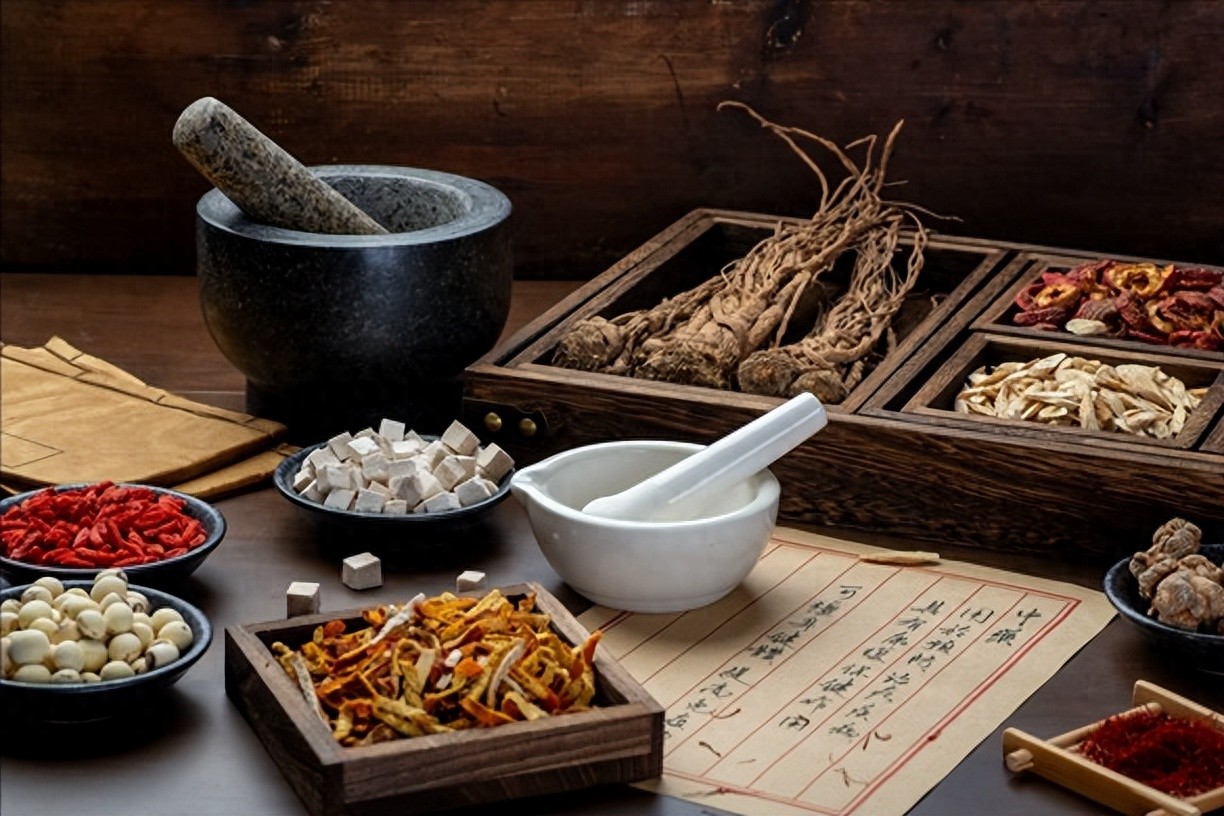
Group 1: Refueling the "engine" — the three kidney herbs (Cornus officinalis, Cuscuta, cinnamon)
In TCM we often say “the Kidney is the root of congenital constitution.” What does that mean? It means the Kidney is like the body’s engine, storing the most precious “essence.” When young people lack energy, middle‑aged people have soreness in the lower back and knees, and the elderly are sensitive to cold, many times it’s because this “engine” lacks sufficient power.
What makes this combination ingenious?
Cornus officinalis (山茱萸), sour in taste, functions to "secure" — it firmly anchors the kidney essence, tonifying without draining.
Cuscuta chinensis (菟丝子) is very mild in nature; it can both tonify yang and nourish yin, acting as a "bidirectional regulator."
But simply tonifying isn’t enough; if the engine itself is cold, adding tonic is useless. This is when cassia bark (肉桂) comes into play — like a flame, it warms and tonifies kidney yang, igniting the kidney’s overall "firepower."
These three herbs together: one supplements, one secures, and one warms, forming a complete power system that makes the kidney qi both ample and stable.
Group 2: Relieving pressure on the "general" — the three liver herbs (Bupleurum, Angelica sinensis, Paeonia lactiflora)
In TCM the liver is like a "general" (将军), governing free flow and responsible for regulating the body's qi movements. If you constantly feel a tightness in your chest, get angry easily, and have distending pain under the ribs on both sides, it's most likely that the "general" is sulking and the liver qi is blocked.
How does this combination relieve pressure for the "general"?
Chaihu (柴胡) is the vanguard for soothing the liver and relieving depression, like a pathfinder who specifically clears the blocked passages.
If liver qi is constrained for a long time, it will affect the blood—after all, "the liver stores the blood." That's when danggui (Angelica sinensis) comes into play: it both tonifies and invigorates the blood, supplying provisions to the "general."
Simply unblocking and replenishing isn't enough; you also need to soothe. If the "general" has a short temper, you must go along with him. Baishao (white peony root), sour and slightly sweet, transforms yin and nourishes the blood while softening the liver—it's like giving the "general" a "psychological massage" to calm his temper.
So you see: one to unblock, one to supply, one to soothe—by making the "general" feel comfortable, the body's qi circulation naturally becomes smooth.
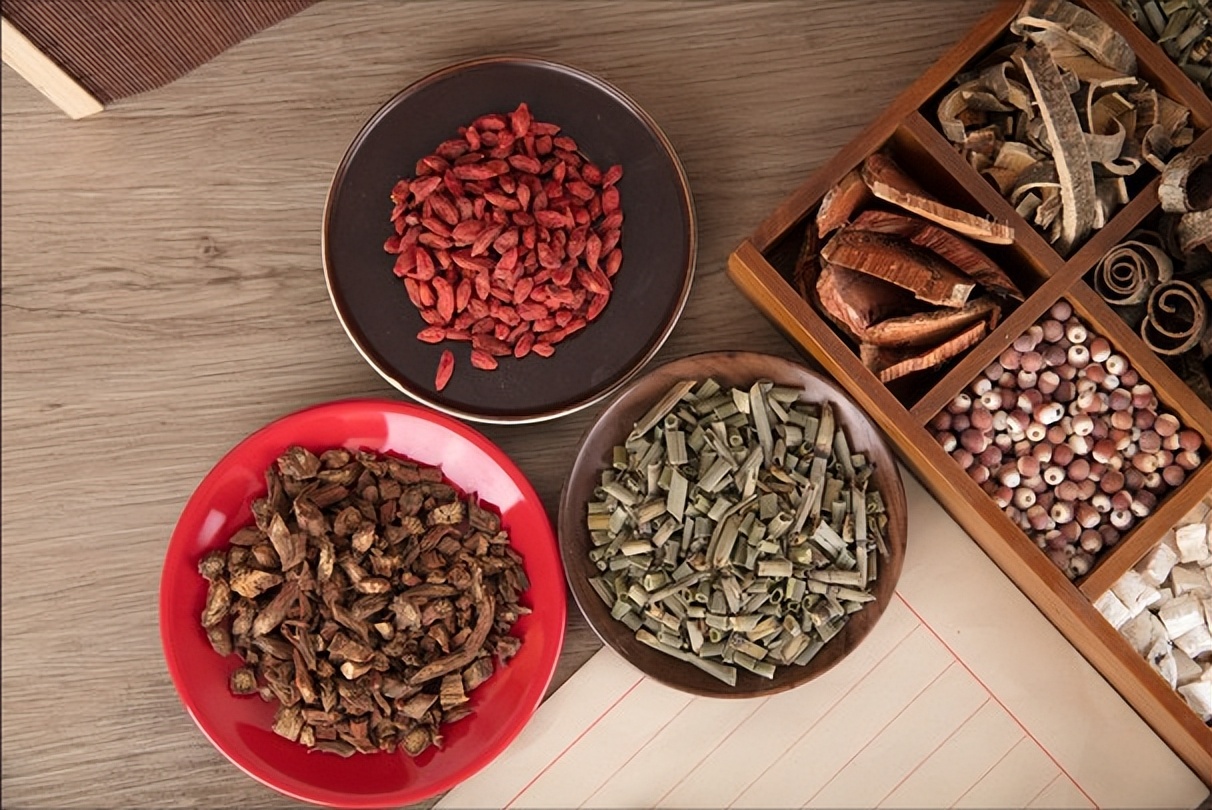
Group 3: Lightening the load of "logistics" — the three spleen herbs (Poria, dried tangerine peel, Atractylodes macrocephala)
The spleen and stomach are our "minister of logistics," responsible for turning what we eat into qi and blood to be distributed throughout the body. If the logistics fail and cannot transform and transport fluids, a person will feel weak all over, bloated in the abdomen, have sticky stools, and when the tongue is stuck out it will be white and thick.
How does this classic combination work?
Atractylodes (Bai Zhu) is the main force; its core task is to "strengthen the spleen," making the "logistics minister" itself more robust.
When the spleen is weak, it's easiest for "dampness"—a kind of harmful residue—to accumulate. Poria (Fu Ling) is the "dehumidifier": by promoting urination and draining dampness, it expels excess dampness from the body.
When dampness is heavy, qi tends to stagnate, causing a feeling of bloating. The role of aged tangerine peel (Chen Pi) is to regulate qi, get the central qi moving again, and incidentally resolve phlegm and dry dampness.
These three herbs act together: one strengthens the spleen and consolidates the root, one promotes urination to dispel dampness, and one moves qi to relieve bloating — working in three ways to restore efficient operation of the "logistics department."
Group 4: Tidying the "Chancellor" — Three Lung Herbs (Platycodon grandiflorus, Fritillaria, Reed Rhizome)
The lungs are the "ministerial organ," like a prime minister managing respiration; they're the gateway for gas exchange between the body and the outside, so they're most easily affected by external pathogenic factors such as dryness or heat. If you cough, have a dry or sore throat, or produce phlegm you can't expectorate when the seasons change, it most likely means the lungs are having problems.
How do these three herbs work together to clear and sweep things away?
Platycodon (jie geng) is quite interesting — it can "open and disseminate lung qi," lifting the lung's cover to let qi flow smoothly, and it can guide other herbs upward to reach the site of disease.
Fritillaria (chuan bei) is a star at resolving phlegm, especially skilled at transforming hot phlegm and moistening the lungs to stop coughing. It's particularly effective for phlegm that is both dry and sticky and can't be expectorated.
If a cough is accompanied by dry mouth and sore throat, that indicates heat and dryness. Reed rhizome (lu gen), this "little expert at clearing heat," steps in — it can clear lung heat and generate fluids, effectively extinguishing the fire while replenishing moisture to the dry lungs.
One opens the path, one transforms phlegm, one clears heat and generates fluids — combined, they leave the lungs both clean and moist.
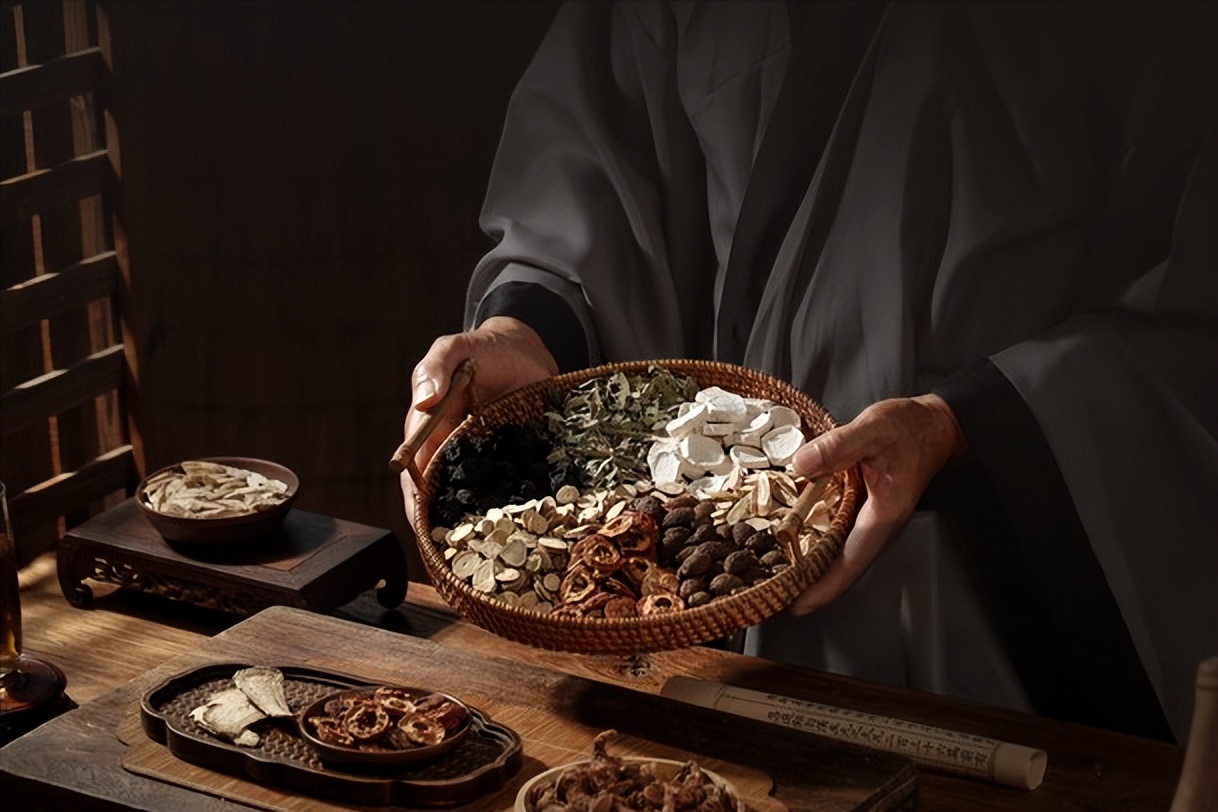
Group 5: Calming the "Sovereign" — Three Heart Herbs (Danshen, Yuan Zhi, Suanzaoren)
The heart is the “ruler organ” that houses the mind; our spirit and sleep are under its control. If heart blood is insufficient or the heart vessels are obstructed, a person will feel palpitations and anxiety, have insomnia and vivid dreams, experience chest tightness, and inexplicable irritability.
How does this combination soothe the “ruler”?
Danshen (Salvia miltiorrhiza) is skilled at activating blood and resolving stasis; as the saying goes, “a single Danshen equals the effect of the Four Substances.” It can clear the pathways to the “ruler,” ensuring smooth flow of the heart’s vessels, qi, and blood.
What if you can’t sleep or your mind is unsettled? Suan Zao Ren (Ziziphus spinosa seed) is the go-to for nourishing the heart and calming the spirit; it directly replenishes heart and liver blood, giving the restless “mind” a settled home.
Yuan Zhi acts as a "bridge of communication": it can calm the mind and boost intelligence, while also connecting the heart and kidneys—allowing heart fire to descend to warm kidney water and kidney water to rise to nourish heart fire—so the body's water and fire reach balance.
One unblocks the channels, one nourishes the blood, and one calms the mind—so the "ruler" has ample qi and blood and rests peacefully; sleep and mood naturally improve.
A few final words:
These five "iron triangles" are a microcosm of TCM's approach to herbal pairing; they emphasize coordinated action rather than lone efforts. Remembering them not only gives you several ways to support your health, but also helps you grasp the essence of TCM's idea of "balance."
Of course, TCM diagnosis and treatment are based on syndrome differentiation, and each person's constitution and condition are vastly different. I'm sharing this for educational purposes, to keep our ancestors' wisdom alive. If you do have symptoms, it's still recommended to consult a professional TCM practitioner so treatment matches the pattern and achieves better results with less effort.