The Ultimate Partner to Yupingfeng San: Dispelling Wind, Resolving Dampness, Fortifying the Spleen, and Supplementing the Lung – A Highly Effective Approach for Regulating Rhinitis.
Many friends are troubled by rhinitis, and when the season changes or they catch a cold from the wind, nasal discharge, nasal congestion, and sneezing arrive on schedule. Many people have heard that Yu Ping Feng Powder is helpful for rhinitis, but some people do not get obvious results when using it alone. In fact, from the perspective of traditional Chinese medicine, the repeated occurrence of rhinitis is often not just a problem with the nose, but the deeper reason lies in the dysfunction of the lung and spleen.

Why is Yu Ping Feng Powder sometimes not enough?
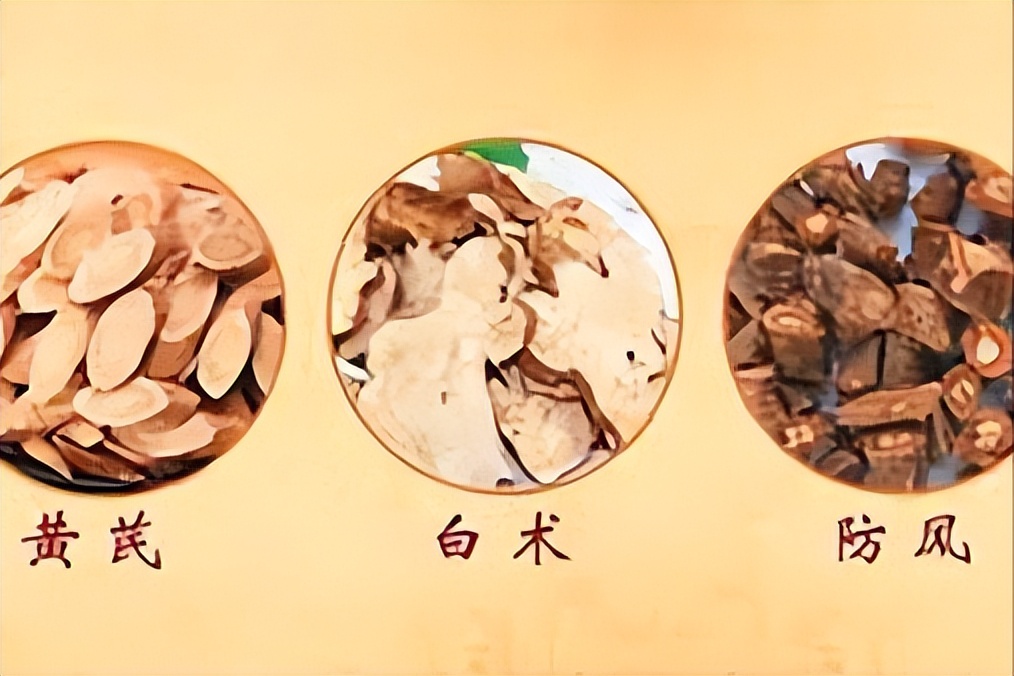
Baibingfeng Powder is a classic Chinese medicine formula for reinforcing the surface, primarily composed of Astragalus membranaceus, Atractylodes macrocephala, and Saposhnikovia divaricata. Astragalus membranaceus tonifies the lung and Qi, Atractylodes macrocephala strengthens the spleen and dries dampness, and Saposhnikovia divaricata dispels wind and expels exterior pathogens. Together, they enhance the body's resistance to external pathogens. However, for rhinitis patients with severe cold-dampness and significant nasal congestion, its power to dispel wind and cold, and to unblock nasal passages is still somewhat insufficient.
The essence of rhinitis: Lung and spleen deficiency, with internal cold-dampness
Traditional Chinese medicine holds that "the lung opens into the nose," and the condition of the nose directly reflects the health of the lung. People with lung Qi deficiency have weak defense against external pathogens, making them easily susceptible to wind-cold and dampness invasion. The pathogens accumulate and obstruct nasal passages, leading to nasal congestion and rhinorrhea. "The lung governs the skin and hair," so many rhinitis patients are afraid of wind and cold and tend to flare up upon stimulation.
On the other hand, "the spleen is the source of phlegm, and the lung is the storage vessel for phlegm." When the spleen is deficient, it cannot transform and transport water-dampness, which accumulates into phlegm. This phlegm then ascends to the lung, obstructing the airway and worsening nasal congestion and rhinorrhea. Therefore, people with chronic rhinitis often have poor digestive function, such as easy bloating and loose stools.
Yupingfeng + Cang'erzi San, combined effect is better
In clinical practice, Yupingfeng San (Jade Wind-Barrier Powder) is often combined with Cang'erzi San (Xanthium Powder) to simultaneously reinforce healthy qi and eliminate pathogens. Yupingfeng San tonifies the lung and spleen, consolidates the exterior to defend against pathogens; while Cang'erzi San (typically containing Xanthii Fructus, Magnolia Flos, Angelicae Dahuricae Radix, etc.) acrid-warm dispersing nature, unblocks the nasal orifices and dissipates wind-cold-dampness, directly alleviating nasal congestion, rhinorrhea, and other nasal symptoms. The combination of these two formulas not only strengthens the body's defense mechanisms but also actively clears external pathogens, thereby addressing both the root cause and symptomatic manifestations.
Real case sharing
In the clinic, there was a 32-year-old female patient with a history of allergic rhinitis for over 6 years. She experienced continuous itching, sneezing when exposed to cold wind or air conditioning, frequent colds, poor appetite, and loose, soft stools. Her tongue was pale with greasy white coating, and her pulse was fine and weak. The syndrome was diagnosed as lung and spleen deficiency with internal hidden cold-dampness. The treatment was Yupingfeng San combined with Cang'erzi San, modified as: Astragalus 15g, Atractylodes macrocephala 10g, Saposhnikoviae 6g, Xanthium fruit 6g, Angelica sinensis 6g, Poria 12g. After one week of medication, nasal congestion and runny nose improved, and after two weeks, the frequency of attacks decreased and appetite improved. After adjusting the original formula, she continued to take it for another month, and during the seasonal changes, she did not have severe relapses again.

Friendly Reminder
While this formula is effective, it should be used based on syndrome differentiation. It is not suitable for those with yellow and thick nasal discharge, dry mouth, and sore throat, which are indicative of wind-heat. Pregnant women, children, and individuals with special medical histories should use this under the guidance of a physician. Combining it with dietary restrictions (avoiding cold foods), avoiding exposure to cold wind, and moderate exercise can enhance stability in the effects.