The Dog Days are when dampness and heat are at their peak. If you use one Chinese herb properly, it can soothe the liver, strengthen the spleen, and help you drive away all that dampness and heat!
When summer arrives, the weather becomes sultry, hot, and rainy. Many friends have complained to me that they’ve lost their appetite lately, feel bloated and uncomfortable, and seem to have had all their energy drained. They can’t muster any enthusiasm for anything, often suffer from “excessive internal heat,” feel heavy all over, and have recurrent eczema and hives. It’s really tormenting!
Actually, in Traditional Chinese Medicine (TCM), the Dog Days period is called "Long Summer," which corresponds to the spleen and stomach system. This is supposed to be the time when the spleen and stomach function at their best. But with the combined assault of summer heat and dampness, the spleen and stomach become as if wrapped in a thick layer of mud, severely impairing their transformative and transporting functions. Ultimately, this leads to an accumulation of internal dampness and heat, and naturally, all sorts of uncomfortable symptoms come knocking.

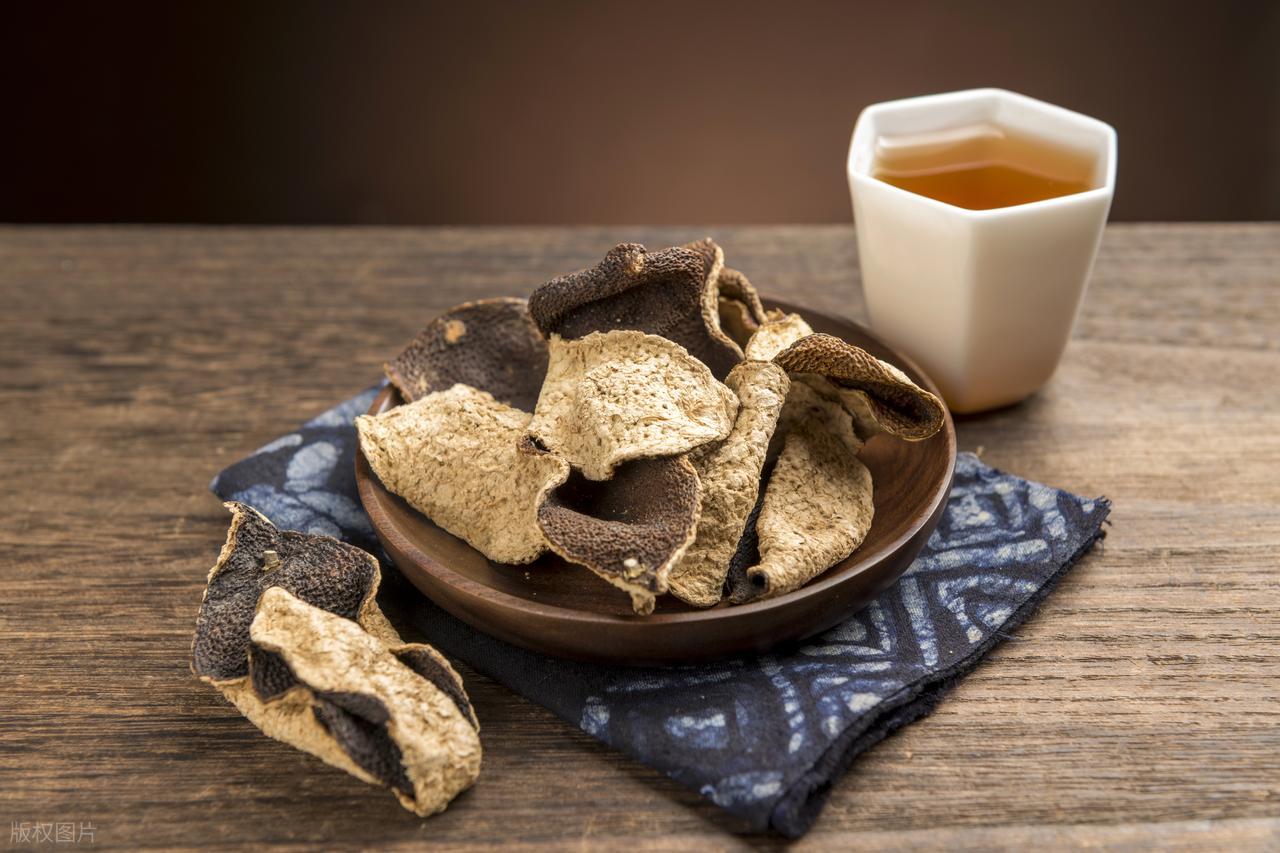
Don't worry, today I will share a practical traditional Chinese medicine (TCM) — dried tangerine peel (Chenpi). It may seem ordinary, but its ability to dispel dampness and resolve phlegm is quite remarkable! Dried tangerine peel is a "savior" during the Sanfu days (the hottest periods of summer). It is warm in nature, pungent in taste, and enters the Lung and Spleen meridians. It has the effects of regulating Qi, fortifying the Spleen, drying dampness, and resolving phlegm. It not only clears damp phlegm from the Spleen and Stomach but also helps to smooth blocked Qi circulation. By regulating the Spleen and Stomach, the smooth flow of Qi and blood allows the body to naturally feel comfortable. However, as dried tangerine peel is warm and drying, using it alone to address damp-heat might be like adding fuel to the fire; its effectiveness is better when combined with other herbs.
First Combination: Dried Tangerine Peel + Gardenia Fruit
As soon as Sanfu days arrive, many people inexplicably feel irritable, restless, chest tightness, dry mouth, bitter taste, and even dampness and itching in the groin area. This may be a manifestation of damp-heat accompanied by excessive Liver fire. Gardenia fruit is a powerful herb in TCM for clearing Liver fire. It can descend the stagnant fire along the Liver meridian. Combined with dried tangerine peel to dispel dampness, the two work together, and feelings of irritability can be quickly relieved.
Second Combination: Dried Tangerine Peel + Trichosanthes Fruit
Some friends often feel like they have phlegm stuck in their throat, thick and sticky, with a sensation of pressure on the chest as if weighed down by a heavy stone, causing discomfort and occasional low-grade fever. This is because damp-heat has thickened the phlegm, making it viscous and sticky. Trichosanthes Kirilowii is excellent at clearing heat and resolving phlegm, helping to break down and expel the sticky phlegm. When combined with dried tangerine peel, which dries dampness, it's like giving a blocked pipe a thorough cleaning, instantly clearing the chest and relieving discomfort.
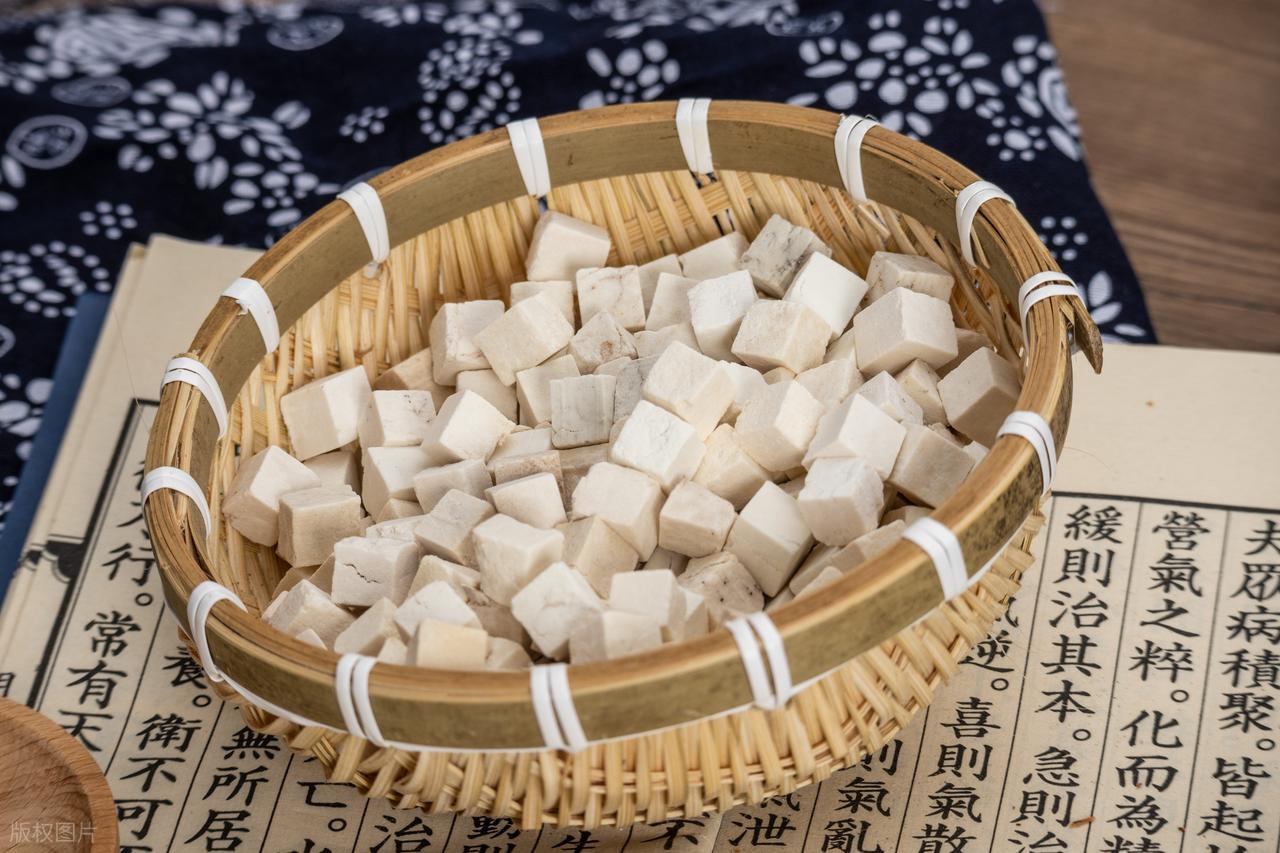
The third combination: Dried Tangerine Peel + Poria
If you often have a poor appetite, feel full after eating just a little, experience general fatigue, and feel mentally foggy throughout the day, this is likely due to phlegm-dampness obstructing the spleen. Poria acts like a moisture-absorbing sponge, specifically drawing out the dampness surrounding the spleen and stomach. When paired with dried tangerine peel to regulate qi, it helps eliminate dampness while invigorating the spleen and stomach. This combination can quickly relieve fatigue and restore your energy and mental clarity.
Finally, a reminder: The content of this article is for educational purposes only. Everyone’s constitution is different. If you experience severe damp-heat symptoms or have other health concerns, it’s best to consult a licensed TCM practitioner before self-prescribing any herbal combinations. Improper use may lead to adverse effects or delay proper treatment.