A lump in the throat, can't cough it up or swallow it down? A classic Zhongjing formula to move qi, resolve phlegm, and specifically treat throat ailments.
Many friends often feel like there's something stuck in their throat. They feel the urge to cough but can't bring anything up, and it won't go down when they swallow. They can't help but constantly clear their throat, but the more they do, the drier and more painful their throat becomes. The discomfort is indescribable. So, what's actually going on here?
In reality, this is what we commonly refer to as pharyngitis. In Traditional Chinese Medicine, it's known as Plum-Pit Qi (Globus Hystericus). This condition is closely related to the state of our Spleen and Lungs. The Spleen is considered the source of phlegm production. If the Spleen is weak, it lacks the strength to properly transport and transform fluids to where they need to go. When fluids accumulate in the body for too long, they gradually transform into dampness and phlegm.

The lung is the organ that stores phlegm. Since the lung governs respiration, phlegm-dampness inside the body moves back and forth along the airways with breathing. When it reaches the throat, it creates this sensation of a foreign body that cannot be swallowed or coughed up. Moreover, with the upward reversal of qi movement, it can also make one feel chest tightness, and coughing may trigger retching or nausea.
To regulate this condition, one must start by strengthening the spleen to dispel dampness, moving qi to transform phlegm. Today, let me share with you a formula passed down from Zhang Zhongjing—Banxia Houpu Tang (Pinellia and Magnolia Bark Decoction)—which specifically addresses throat ailments like plum-pit qi (globus pharyngis).
This formula consists of five medicinal herbs: Banxia (Pinellia), Houpu (Magnolia Bark), Shengjiang (Fresh Ginger), Suye (Perilla Leaf), and Fuling (Poria). Starting with Banxia: it is acrid and warm, enters the lung and stomach channels, dissolves phlegm nodules, and also counteracts upward rebellion to harmonize the stomach. Then look at Houpu: it can direct qi downward and relieve fullness. Paired with Banxia, it not only transforms phlegm nodules but also stops the upward reversal of qi.
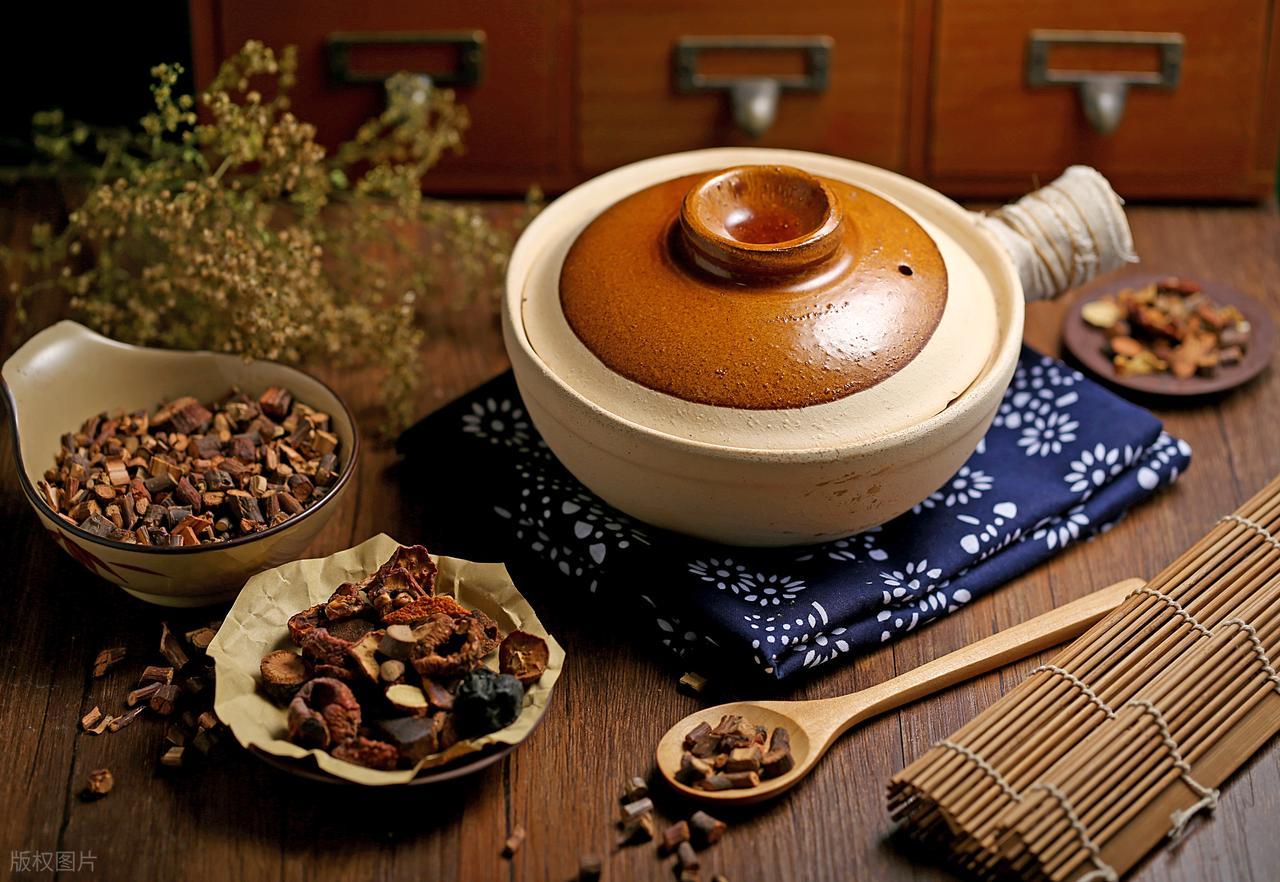
Suye, with its aromatic properties, moves qi and regulates lung and liver qi, enhancing Houpu's ability to transform phlegm. Fuling helps the spleen expel dampness, reducing the generation of phlegm-dampness at its root. Shengjiang is warm in nature, disperses nodules, and stops vomiting, preventing retching during coughing. When these herbs are combined, they have an excellent effect of counteracting upward rebellion, transforming phlegm, moving qi, and dispersing nodules, forming a classic formula for treating plum-pit qi.
This article is for informational purposes only. Traditional Chinese Medicine emphasizes syndrome differentiation and treatment; individual conditions vary, and medication should be adjusted accordingly. Therefore, if you have this issue, it's best to seek medication guidance from a professional practitioner. That’s all for today’s discussion. See you next time!