White phlegm is in the lungs, sticky phlegm is in the spleen, old phlegm is in the kidneys—three steps to dig out the root of phlegm production!
As the saying goes, "Many diseases are caused by phlegm wreaking havoc." The classic TCM text *Danxi's Methods of Treatment* even states bluntly, "Phlegm, as a substance, follows the rise and fall of qi, reaching everywhere."
This means that phlegm moves around with the flow of qi—blocking the lungs leads to incessant coughing and wheezing, clouding the head causes dizziness and vertigo, and reaching the spleen and stomach affects appetite.
Therefore, eliminating phlegm does not solely refer to "eliminating phlegm in the lungs." Only by identifying the root cause of phlegm production and thoroughly "eradicating" it can we achieve a fundamental cure. Today, Dr. Liang will share three scenarios where targeted medication yields the best results.
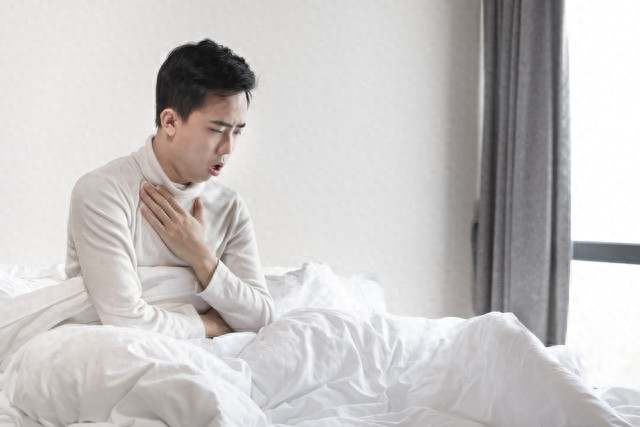
White phlegm is associated with the lungs
If your phlegm is predominantly white, clear, thin, and abundant, resembling foam, it is likely caused by wind-cold invading the lungs.
"The Yellow Emperor's Classic of Internal Medicine" states: "External cold and internal cold fluids damage the lungs." If cold pathogens invade, impairing the lungs’ diffusion and descent functions, body fluids fail to distribute properly, condensing into phlegm.
In such cases, the Minor Bluegreen Dragon Decoction (or granules) from the medical sage Zhang Zhongjing can be applied. It helps warm the lungs, dispel cold, resolve retained fluids, and relieve cough.
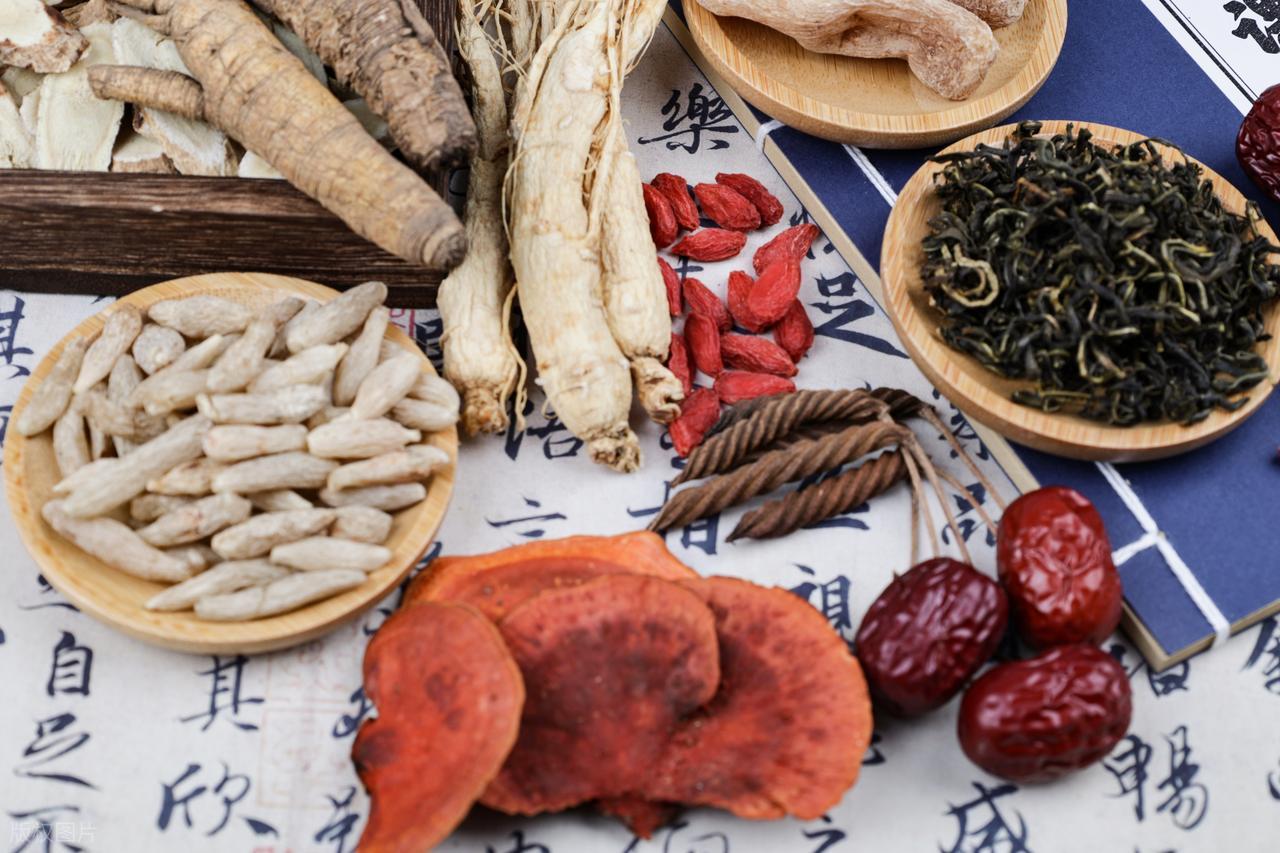
In this formula, ephedra and cinnamon twigs expel wind-cold from the body surface; dried ginger and asarum root warm and transform cold fluids in the lungs; schisandra berry and peony root converge lung qi; and pinellia rhizome dries dampness and transforms phlegm. The ancients likened this formula to "the Bluegreen Dragon controlling water," precisely because it effectively clears cold phlegm and retained fluids entrenched in the lungs.
II.
Mucus in the Spleen
If you feel a sticky sensation in the throat, with thick, viscous phlegm, along with sticky and unformed stools and unexplained edema, the issue may lie in the spleen. Traditional Chinese medicine holds that "the spleen is the source of phlegm production." When the spleen is deficient and unable to transform fluids and dampness, dampness accumulates and forms phlegm, which ascends to the lungs and results in sticky phlegm.
In such cases, treatment should focus on the spleen. As Ming Dynasty physician Zhang Jingyue insightfully stated, "To treat phlegm, one must warm the spleen and strengthen the stomach." Consider using Erchen Wan (Two Aged Herbs Pill) combined with Pingwei Wan (Calming the Stomach Pill). These two formulas work together not only to eliminate existing phlegm but also to restore the spleen and stomach's transforming and transporting functions, thereby cutting off the source of phlegm production.
If accompanied by symptoms such as abdominal bloating and poor appetite, Liujunzi Wan (Six Gentlemen Decoction) alone can also be effective.
Three.
Persistent phlegm resides in the kidneys.
If there is little but sticky phlegm that seems to cling deep in the throat, with great effort only yielding minimal expulsion, and accompanied by symptoms such as soreness and weakness in the lower back and knees, cold hands and feet, and frequent nighttime urination, this often falls into the category of "persistent phlegm" or "stubborn phlegm," with the root cause typically being kidney yang deficiency.
The kidneys govern water metabolism, and kidney yang acts like a small sun within the body. When yang qi is insufficient, the vaporization of fluids becomes impaired, leading to accumulation and the formation of phlegm. This type of phlegm often lies deep and is difficult to expel, resulting in a prolonged course of illness.
To deal with this stubborn old phlegm, it is necessary to warm and tonify kidney yang, transform qi, and promote diuresis. Chinese patent medicines like Jin Gu Shen Qi Wan and Gui Fu Di Huang Wan are the preferred options.
In this formula, Aconite and Cinnamon Twig warm and tonify kidney yang, while Rehmannia and Cornus nourish kidney essence. Poria and Alisma promote diuresis and drain dampness. The entire formula is warming but not drying, both tonifying the foundation of innate constitution and transforming existing phlegm.