Spleen-Stomach Disharmony Generates Phlegm-Dampness, and Phlegm-Dampness Disturbs Upward Causing Dizziness? Banxia Baizhu Tianma Decoction Helps You Regulate!
A patient recently often felt dizzy, with a head feeling heavy as if wrapped in damp cotton, blurred vision, and a feeling of heaviness that worsened upon waking in the morning or after exertion. All examinations were normal, and taking circulation-improving medication was ineffective. Further inquiry revealed she also experienced symptoms like a heavy body sensation, poor appetite, and sticky stools. Observing her tongue and pulse, her tongue coating was thick and white like cream, and her pulse was soggy and moderate. She was diagnosed with dizziness of the "phlegm-dampness obstructing the middle" pattern and was treated with Banxia Baizhu Tianma Decoction for regulation. After one week, the dizziness lessened, and after half a month, her body felt much lighter and clearer.
Traditional Chinese Medicine (TCM) posits that phlegm-dampness obstructing the middle is the key to such unexplained dizziness. The spleen and stomach govern the transportation and transformation of fluids. If the spleen and stomach are weak, or if one indulges excessively in rich, sweet, raw, or cold foods, it can lead to abnormal water metabolism. The fluids then accumulate, forming dampness, and over time, this sticky and stagnant dampness transforms into phlegm-dampness. Phlegm-dampness is heavy, sticky, and cloying. It obstructs the clear yang qi from rising to nourish the head and also clouds the clear orifices. This is the rationale behind "no phlegm, no vertigo." When the head lacks nourishment and is enveloped by turbid qi, a heavy, dizzy sensation naturally occurs.
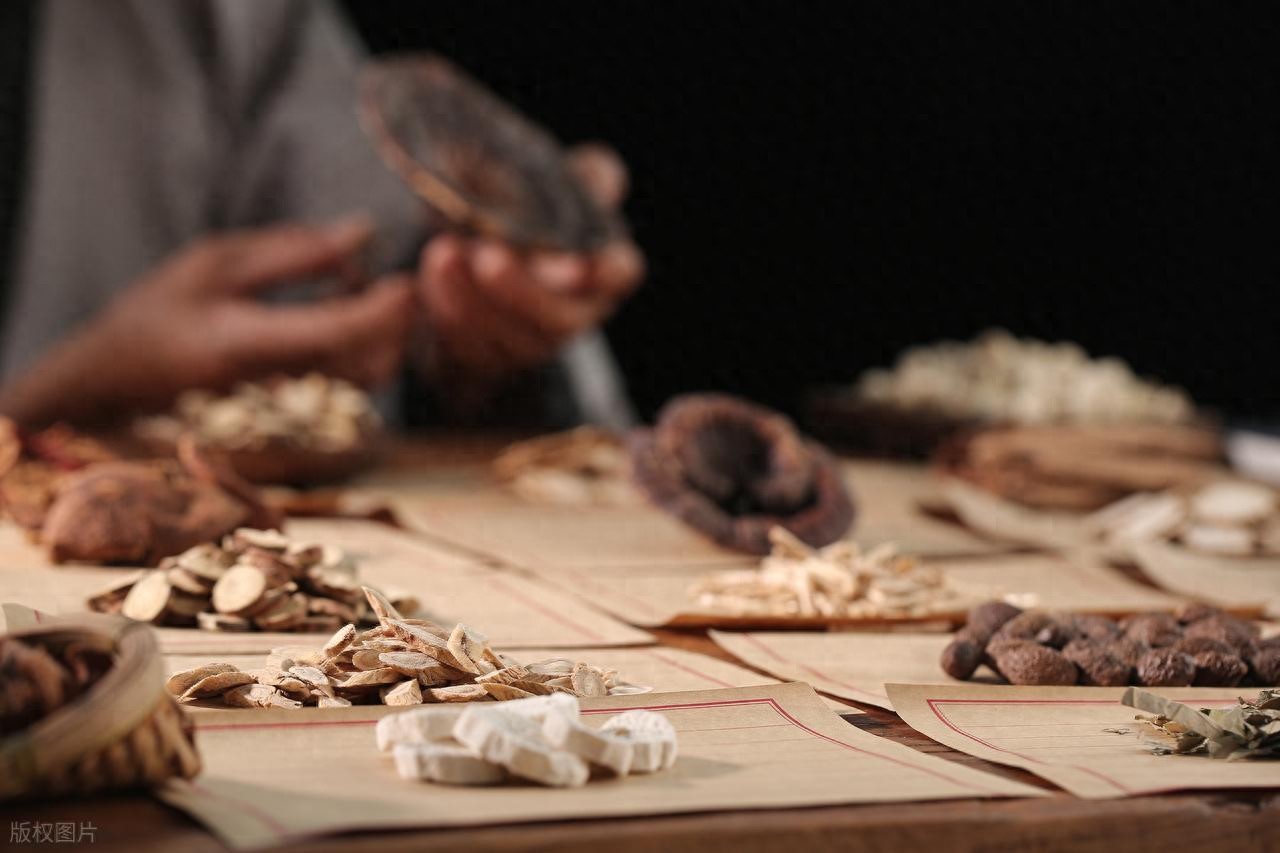
Banxia Baizhu Tianma Decoction originates from 《医学心悟》(Medical Insights). Its core efficacy lies in resolving phlegm, dispelling wind, strengthening the spleen, and eliminating dampness. It is a classic formula for treating dizziness caused by phlegm-dampness. Though the formula is simple (containing Pinellia ternata, Gastrodia elata, Atractylodes macrocephala, Poria cocos, dried tangerine peel, and licorice root), its combination is exquisite: Pinellia ternata dries dampness, resolves phlegm, and directs rebellious qi downward; Gastrodia elata extinguishes wind, stops dizziness, and clears the orifices. These two herbs work together—one descending and one ascending—to directly address the symptoms. Atractylodes macrocephala strengthens the spleen and dries dampness; Poria cocos promotes urination and leaches out dampness, reducing the generation of phlegm-dampness from the root. Dried tangerine peel regulates qi to assist in the transformation and transportation of water-dampness, while licorice root harmonizes all the herbs in the formula.
Traditional Chinese Medicine treatment emphasizes pattern differentiation and modification of formulas. If phlegm-dampness is predominant, add Atractylodes lancea to enhance dampness elimination. If accompanied by aversion to wind and limb numbness, add Ligusticum chuanxiong and Saposhnikovia divaricata to dispel wind. If spleen deficiency is evident (manifesting as fatigue and loose stools), add Codonopsis pilosula and Astragalus membranaceus to supplement qi. If phlegm stagnates and transforms into heat (manifesting as bitter taste in the mouth and yellow tongue coating), remove dried tangerine peel and add Bamboo shavings and Coptis chinensis to clear heat. For severe dizziness, add Uncaria rhynchophylla and abalone shell to pacify the liver and stop dizziness.
It is important to note that this formula is only suitable for dizziness caused by phlegm-dampness obstructing the middle burner. It should not be misused for dizziness stemming from liver-kidney yin deficiency or qi-blood insufficiency. Physical discomfort often originates from internal imbalances. Banxia Baizhu Tianma Decoction restores balance by regulating the spleen and stomach and eliminating phlegm-dampness. This embodies the essence of TCM's principle of "treating disease by addressing its root." Its use must strictly follow the guidance of a professional practitioner.