"Unblocking" Benign Prostatic Hyperplasia: Three Key Points to Help You Avoid Detours
In Traditional Chinese Medicine (TCM), prostate issues mostly fall under the category of "Long Bi" (urinary retention), which is caused by the dysfunction of the "Qi transformation" in the Sanjiao (Triple Burner) and the bladder.
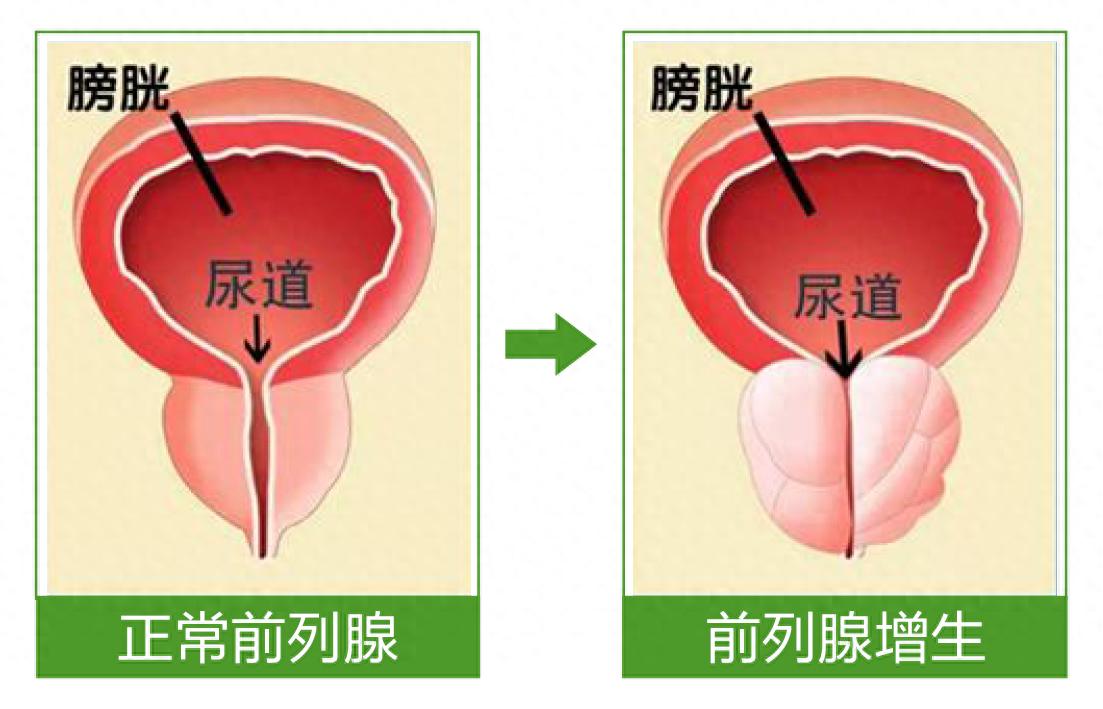
The first key point is clearing heat and promoting diuresis. When there is excessive damp-heat in the body, long-term stagnation tends to move downward, leading to heat accumulation in the bladder and weak Qi transformation. This prevents the body from separating the clear from the turbid, resulting in benign prostatic hyperplasia. People in this category often experience symptoms such as infrequent urination, inability to urinate, cloudy urine color, white discharge from the urethral orifice, abdominal bloating, a dry and bitter mouth, a red tongue, and a yellow, greasy tongue coating. In such cases, it is necessary to clear heat and resolve dampness.
The second key point is to promote Qi circulation and resolve blood stasis. Qi drives the movement of blood; when Qi is deficient and lacks the strength to push, blood stasis accumulates in the bladder. This can easily lead to prostate hyperplasia and urinary tract obstruction, resulting in symptoms such as difficulty urinating, weak urine stream, dribbling, stinging sensations in the urethra, and a dark purple tongue with stasis spots. In such cases, it is necessary to invigorate the blood, resolve stasis, and promote Qi circulation.
The third key point is to warm and supplement Kidney Yang. When Kidney Yang is insufficient, the "Qi transformation" process is weak, and the opening and closing of the bladder become dysfunctional—much like a broken valve on a faucet. This often leads to an inability to hold urine, frequent urination, incomplete emptying, coldness in the lower Jiao (lower body), cold feet, cold pain in the lower back and knees, tinnitus, a pale tongue, and thin tongue coating.
Do you understand now?