The best medicine in the world is yang energy, and here's a simple way to replenish it
Do you often experience this?
Feeling cold even in summer, with hands and feet always icy?
Feeling like wearing wet clothes, heavy and weak all over with a foggy head?
Is your tongue swollen with teeth marks on the sides?
Do you often feel aches and pains in your waist, back, shoulders, legs, or feet with discomfort everywhere?
Feeling lethargic all day with no energy for anything?

If you have several of the above symptoms, from the perspective of Traditional Chinese Medicine (TCM), these are mostly manifestations of insufficient yang energy in the body and an excess of cold-dampness. TCM believes that yang energy acts like the body's "little sun," responsible for warming the whole body, promoting the circulation of qi and blood, and defending against external pathogens (cold-dampness). When yang energy is weak, the body is more prone to feeling cold, unable to expel dampness, and experiencing poor qi and blood circulation, naturally leading to the discomforts mentioned above.
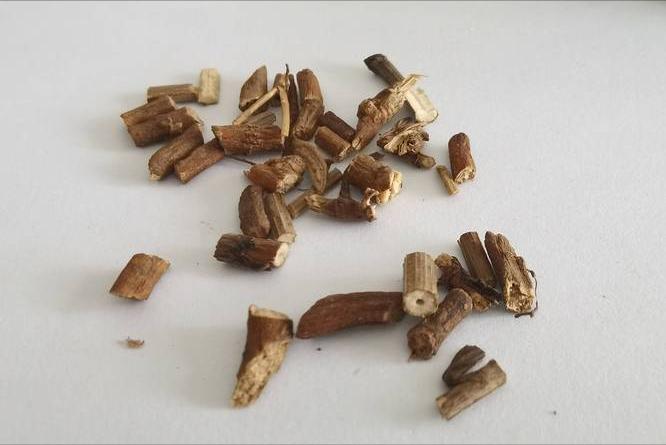
Here's a simple remedy: cinnamon bark (rou gui) + bupleurum root (chai hu) infused in water.
Method: Take 3 grams of cinnamon bark (rou gui) + 5 grams of bupleurum root (chai hu), steep in boiling water for about 10 minutes, then drink as tea.
Why choose these two herbs?
Cinnamon: It's an expert at warming and replenishing yang qi, particularly skilled at warming the kidneys, spleen, and stomach. Traditional Chinese medicine describes its functions as "supplementing fire to assist yang," "dispelling cold to relieve pain," and "warming and unblocking meridians." Simply put, it adds a "small flame" to the body, driving away coldness and promoting smoother qi and blood circulation—especially effective for cold pain in the lower back and knees, as well as cold hands and feet.
Bupleurum: Its primary roles are "lifting yang qi" and "soothing the liver to relieve stagnation." When yang qi is deficient, it may "sink," and bupleurum helps raise and distribute it to where it's needed. At the same time, it facilitates the smooth flow of qi in the body, keeping energy pathways unobstructed. When paired, cinnamon focuses on "warming and replenishing," while bupleurum handles "lifting" and "unblocking"—boosting yang without easily causing excessive heat.

A real-life example:
Aunt Wang, 45, an office clerk, suffered from perpetually cold hands and feet, avoided air conditioning even in summer, and often felt chills in her back. She was easily fatigued, drowsy by afternoon, with stiff and achy shoulders and neck, and a swollen tongue with teeth marks. After a TCM diagnosis, the doctor concluded she had classic "spleen and kidney yang deficiency with internal cold-damp retention." Alongside advice on staying warm and gentle exercise, she was recommended a cinnamon-bupleurum tea (combined with other treatments). After nearly a month of consistent use, Aunt Wang noticed warmer extremities, less cold sensitivity, improved afternoon energy, and reduced shoulder pain. She marveled, "Who knew two little herbs in hot water could really warm me up!"
Important reminder:
This tea recipe is suitable for those like Aunt Wang who experience yang deficiency with cold intolerance, cold hands and feet, and cold pain in the lower back and knees. However, each person's constitution is different, as is the severity of cold-dampness. If symptoms are severe or discomfort occurs after drinking, it's best to consult a professional TCM practitioner for proper diagnosis and safer adjustment. There are many health-preserving methods—the best one is what suits you personally!