Regulating the Middle Jiao is simple – master the Four Gentlemen Decoction, and your whole body will flow unobstructed
In Traditional Chinese Medicine, we often say "the spleen and stomach serve as the foundation of postnatal life and the source of qi-blood production." Why are the spleen and stomach so important? Because the generation of the body's qi-blood and the smooth circulation of qi throughout the body all depend on this "central coordination station" – the spleen and stomach.
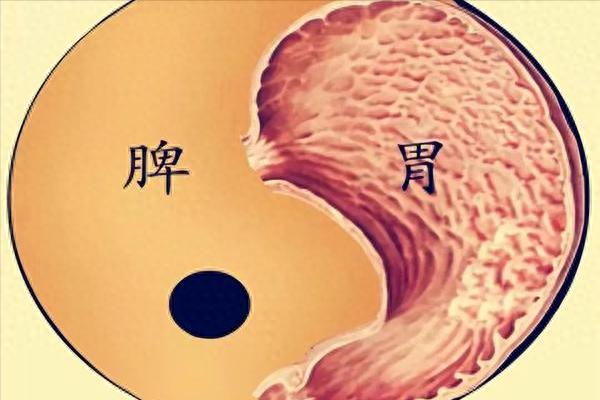
How does Traditional Chinese Medicine view the pivotal role of the spleen and stomach?
The spleen and stomach are located in the middle of the human body (middle jiao). The spleen governs the ascent of the clear, responsible for transporting the essence of food (water and grain essence) upward to the heart and lungs; the stomach governs the descent of the turbid, responsible for conveying digested waste downward.
The upward movement of liver qi requires support from the spleen's ascending function, while the downward movement of lung qi needs coordination with the stomach's descending function. The interaction between the heart and kidneys (the descent of heart fire and the ascent of kidney water) also requires smooth qi movement in the middle jiao as a bridge.
If the spleen and stomach are weak and their ascending-descending functions are impaired, it's like a paralyzed transportation hub—the qi, blood circulation, and organ functions throughout the body may all be affected, leading to various discomforts such as abdominal distension, loss of appetite, fatigue, irregular bowel movements, shortness of breath, and reluctance to speak.
Four Gentlemen Decoction: A foundational formula for regulating the spleen and stomach and replenishing qi and blood.
For the common issue of spleen-stomach qi deficiency, traditional Chinese medicine has a very classic foundational formula - the Four Gentlemen Decoction (Si Jun Zi Tang). It consists of four herbs:
Ginseng (or Codonopsis root): Greatly tonifies primordial qi, strengthens the spleen and benefits the lungs.
White Atractylodes Rhizome (Bai Zhu): Strengthens the spleen and boosts qi, dries dampness and promotes urination.
Poria (Fu Ling): Strengthens the spleen and drains dampness, calms the heart and tranquilizes the spirit.
Roasted licorice root: Benefits qi and harmonizes the middle, moderates all medicinal properties.
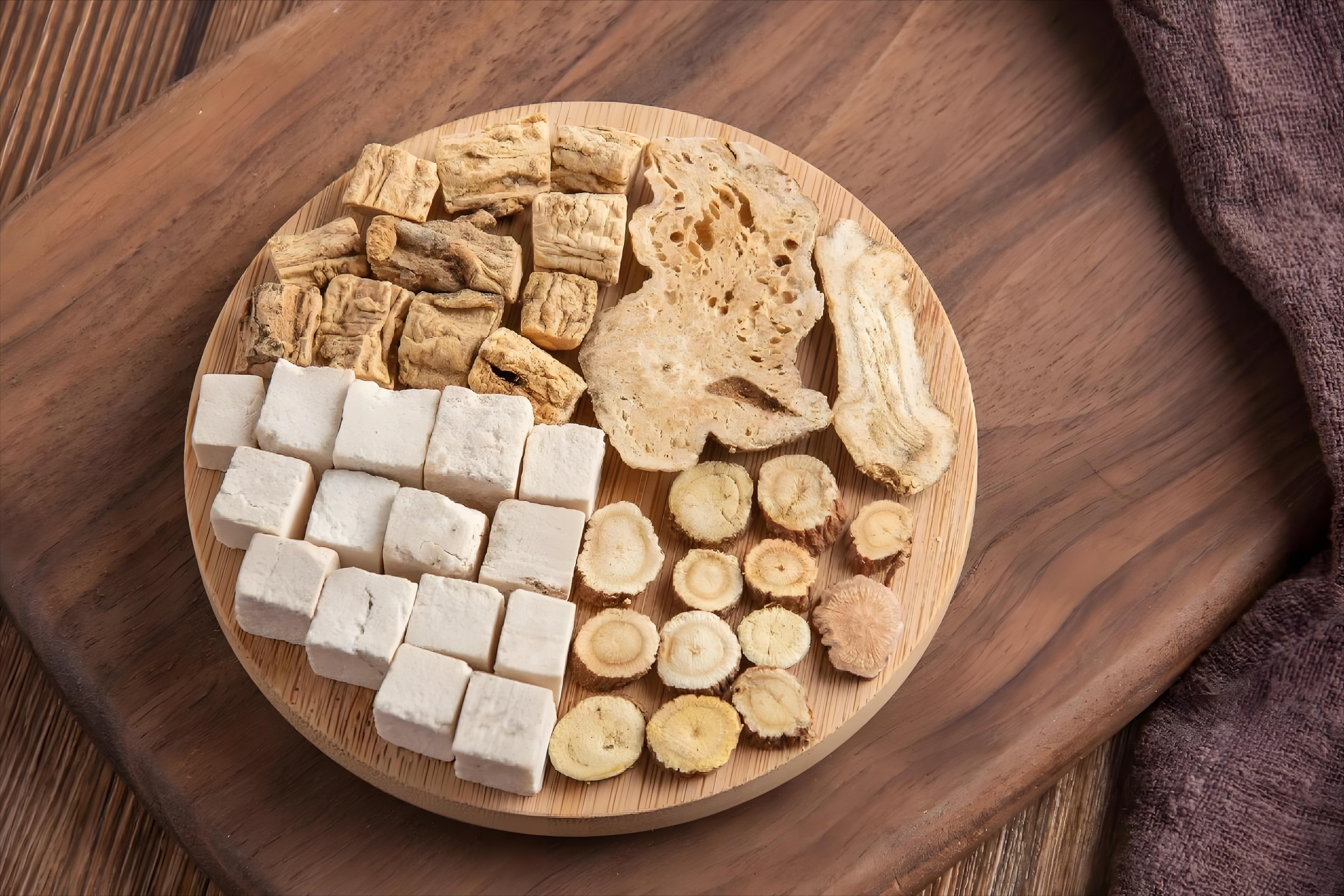
The core function of this formula is: Strengthening the spleen and supplementing qi. It acts like "refueling" a weakened spleen-stomach system, enhancing its abilities to transform food, generate qi-blood, and maintain the normal functioning of the ascending-descending pivot.
How to use it flexibly?
Four Noble Herbs Decoction is a foundational formula that TCM practitioners often modify based on the patient's specific condition through additions or subtractions:
Thick white tongue coating (indicating dampness): Atractylodes macrocephala may be replaced with more strongly drying Atractylodes rhizome.
Accompanied by soreness and weakness in lower back and knees: Herbs like Eucommia bark and Achyranthes root may be added to tonify kidneys and strengthen the lumbar region.
Accompanied by deficient fire symptoms (such as irritability, insomnia): Sedating herbs like dragon bone and oyster shell may be added to anchor yang and calm the spirit.
Positive signs after taking: Improved appetite, better digestion, smooth passing of gas, gradual warming of the body (especially abdomen and extremities), and restored energy often indicate improving spleen-stomach function, increased qi-blood production, and smoother qi movement.

Especially suitable for which groups of people?
The elderly.
Individuals who are recovering from severe illness or have chronic weakness.
People with chronic fatigue, shortness of breath, poor digestion, and sallow complexion due to qi and blood deficiency.
TCM Regulation Approach: Even when there are pathological products like phlegm-dampness or blood stasis ("waste") in the body, individuals with weak spleen-stomach function and qi-blood deficiency often need to first regulate and tonify their spleen-stomach to support healthy qi. Only when the spleen-stomach becomes strong and qi-blood becomes sufficient does the body gain adequate strength to eliminate these "waste" materials.
Here's an example of conditioning:
Ms. Zhang, aged 68, underwent major surgery half a year ago and has experienced slow recovery since. She constantly feels weak, tires easily with minimal activity, has poor appetite, experiences abdominal bloating after eating, has alternating constipation and diarrhea, and often has cold hands and feet. The traditional Chinese medicine practitioner diagnosed her with "spleen-stomach qi deficiency with insufficient qi-blood production" and prescribed a modified Sijunzi Decoction (considering her age and postoperative weakness, Codonopsis pilosula was used instead of ginseng, with a small amount of Citrus reticulata peel added to regulate qi). Ms. Zhang diligently took the medication while maintaining a light, easily digestible diet. After about two weeks, she reported improved appetite, reduced bloating, and smoother digestion. After continuing the treatment for over a month, she gradually regained some strength, her extremities became less cold, and her overall mental state showed marked improvement.
Important reminder:
The Four Gentlemen Decoction is a classic formula for regulating spleen and stomach qi deficiency, with mild effects. However, it is not a universal remedy that "clears all blockages." There are various causes of physical discomfort that require professional syndrome differentiation.
Use under the guidance of a TCM practitioner: The modifications mentioned above are for illustrative purposes only. In actual practice, the physician needs to precisely adjust the herbal ingredients and dosage according to your specific constitution and symptoms (cold/heat, deficiency/excess). Do not prepare the prescription on your own!
Lifestyle adjustments: Maintaining a regular diet (eating until 70-80% full with easily digestible foods), moderate physical activity, and avoiding excessive worrying or overexertion are crucial for nourishing the spleen and stomach.