Regulating Liver Qi Must Involve Nourishing Blood, Otherwise the Consequence of Reckless Liver Regulation—Blood Exhaustion and Death
Nowadays, many people feel stressed and depressed, thinking of taking liver-soothing and depression-relieving medications like Xiaoyao Pills or Chaihu Shugan San. While these can provide temporary relief, I must remind you: regulating liver qi shouldn't rely solely on "draining" - it's crucial to understand "nourishing." Blindly or long-term use of such liver-regulating medications alone may lead to counterproductive effects.
Why might promoting liver Qi alone potentially "harm the body"?
In traditional Chinese medicine, it is said that "the liver stores blood." The liver requires sufficient blood nourishment to properly perform its functions of regulating emotions and promoting the smooth flow of qi (this is called "yin in substance and yang in function"). Many liver-soothing herbs have dispersing properties and are relatively potent. If used frequently or by individuals with preexisting liver blood deficiency, these herbs may easily deplete the liver's precious yin-blood.
Deficiency of liver blood can lead to a series of problems:
Impaired liver nourishment: Without adequate blood nourishment, the liver itself becomes more prone to "stagnation" or "excessive heat" (increased liver qi stagnation or liver yang hyperactivity).
Warning signs from the body: Symptoms such as dizziness and blurred vision (blood failing to ascend to the head), numbness in hands and feet (blood failing to nourish tendons), restless sleep with frequent awakenings (blood failing to nourish the heart)—these symptoms may become increasingly noticeable.
Vicious cycle: The more liver blood is depleted, the more prone the liver functions are to imbalance, forming a paradoxical loop of "the more you disperse, the more deficient you become; the more deficient you are, the more likely you are to stagnate."
Correct approach: Never forget to nourish blood while dispersing liver qi
To truly regulate liver qi stagnation without harming the fundamental constitution, the key lies in "dispersing contains nourishing, moving contains moistening." That is to say, while promoting the flow of liver qi, one must pay attention to nourishing liver blood and replenishing yin fluids.
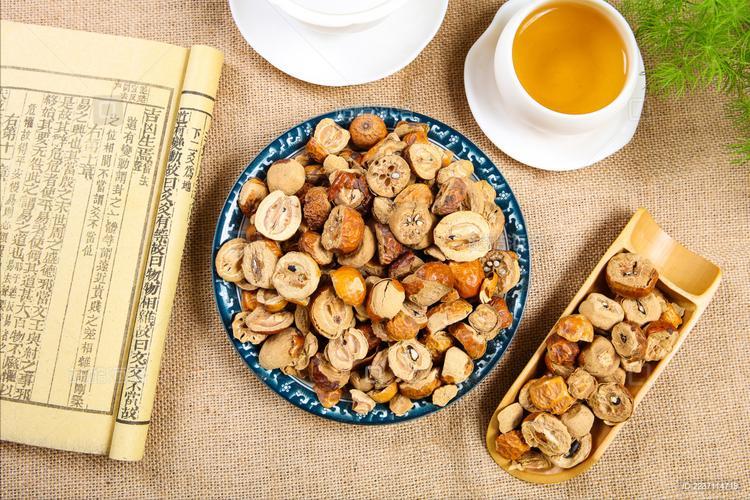
Classic formula: The wisdom of Yiguan Jian (Nourishing Liver Decoction)
The formula Yiguan Jian (一贯煎) perfectly demonstrates this approach. While it does contain liver-soothing herbs (such as Sichuan Chinaberry [川楝子]), its core components are large quantities of yin-nourishing and blood-tonifying herbs: raw Rehmannia root (生地黄), wolfberry fruit (枸杞子), and Chinese angelica (当归). These herbs powerfully supplement liver and kidney yin, much like providing ample hydration (yin-blood) to a tree (liver wood) to strengthen its branches—naturally preventing "stagnation" (nourishing water to cultivate wood). This achieves the goal of relieving liver stagnation without excessively depleting yin-blood (soothing the liver without plundering yin), while also ensuring yin nourishment doesn’t obstruct qi movement (nourishing yin without stagnating qi).
Real case:
Ms. Zhang, 42, experienced chest tightness, frequent sighing, and irritability due to high work stress. Hearing that Xiaoyao Pills (逍遥丸) could soothe liver stagnation, she self-medicated. Initially, she felt slight relief, but prolonged use led to worsening symptoms: increasingly dry eyes, blurred vision, restless sleep, occasional numbness in limbs, and significantly reduced menstrual flow. A TCM practitioner diagnosed her (tongue: red with scant coating) as having chronic liver stagnation compounded by excessive dispersion depleting liver blood and yin fluids. Her prescription focused on Yiguan Jian with added gentle liver-nourishing herbs. After two months of treatment, she reported markedly improved eye comfort, better sleep, reduced numbness, and—though emotional fluctuations persisted—far less irritability and "hair-trigger" reactions.

Important reminder:
Do not self-medicate indiscriminately: Liver-soothing medications are not health supplements and should not be taken blindly for long periods just to seek temporary relief. Those prone to dizziness, blurred vision, poor sleep, or scanty menstrual flow should exercise particular caution.
Consult a professional physician for diagnosis: Is it liver stagnation? How severe is the stagnation? Is there liver blood deficiency or yin deficiency? These require assessment by a professional TCM physician through observation, listening, questioning, and palpation to determine whether to use simple liver-soothing herbs or combine them with blood-nourishing and yin-tonifying formulas (such as the approach of Yi Guan Jian), or other treatment methods.
Pay attention to body signals: If you experience symptoms of "blood and yin depletion" (such as dry eyes, poor sleep, numbness in hands and feet, reduced menstrual flow, etc.) while taking liver-soothing medications, be sure to stop the medication promptly and consult a doctor.
Regulating liver qi is important, but remember "nourishing blood is essential when soothing the liver" for lasting results. Don't let liver regulation turn into liver damage!