Poor spleen and stomach health indicates a leakage of yang energy from the gate of vitality (命门). Zhang Zhongjing's ancient prescription greatly replenishes the fire of the gate of vitality.
Many people suffer from long-term poor spleen and stomach function, experiencing bloating, indigestion, loose stools, extreme sensitivity to cold, fatigue, and lethargy after eating. They may have tried various health supplements or medications to strengthen the spleen and nourish the stomach, but the results often fall short. In fact, from the holistic perspective of traditional Chinese medicine, spleen and stomach function is closely related to the yang energy in the kidneys. Frequently, spleen and stomach issues are merely surface symptoms, with the true root cause lying in kidney yang deficiency—commonly referred to as "declining fire of the gate of vitality."

Traditional Chinese medicine theory holds that the kidneys are the foundation of innate constitution, storing both primordial yin and yang. Among these, kidney yang, also known as the "fire of the life gate," serves as the root of the body's yang energy, providing warmth and motivation to all organs. The spleen is the foundation of acquired constitution, responsible for transforming and transporting nutrients from food and water, but it requires the warmth of kidney yang to function properly. This is akin to cooking on a stove—no matter how good the pot (spleen and stomach) is, if the fire beneath (kidney yang) is insufficient, the food cannot be cooked thoroughly.
In the Five Elements theory, the kidneys belong to water, while the spleen belongs to earth. Kidney yang (fire) can warm and nourish the spleen-earth, promoting transformation and transportation. If kidney yang is deficient and fails to warm the spleen-earth, it leads to the phenomenon where "fire fails to generate earth," resulting in diminished digestive functions and symptoms such as poor appetite, abdominal distension, loose stools, and undigested food. Moreover, yang deficiency leads to internal cold, making the body more susceptible to external cold-damp pathogens, forming a vicious cycle of "yang deficiency—cold stagnation—spleen deficiency."
Patients with such conditions often experience not only spleen-stomach discomfort but also a series of symptoms related to kidney yang deficiency: aversion to cold, cold limbs, soreness and weakness in the lower back and knees, lack of energy, fatigue, frequent nighttime urination, clear and copious urine, and in men, possible decrease in reproductive function. Women may experience dysmenorrhea, delayed menstruation, and related issues. Tongue examination often reveals a pale, swollen tongue with tooth marks on the edges and a white, slippery coating. Pulse diagnosis typically shows deep, thin, and weak pulses, especially at the chi (kidney) position.

For such cases, the renowned formula *Sini Tang* (Frigid Extremities Decoction), recorded by the Sage of Medicine Zhang Zhongjing in *Treatise on Cold Damage*, precisely addresses the root by warming and tonifying the yang of the kidneys and spleen. Although this formula consists of only three herbs, its composition is precise and its effects powerful:
Aconite (9-15g): Highly pungent and intensely hot, toxic when raw but its toxicity is reduced after processing while preserving efficacy. Enters the heart, kidney, and spleen meridians. Capable of restoring yang to rescue from collapse, replenishing fire to aid yang, and dispersing cold to relieve pain. Known as the "foremost essential herb for restoring yang and rescuing collapse," excels at warming and tonifying the fire of the life gate (mingmen), stimulating the body's yang energy.
Dried Ginger (6-9g): Pungent and hot, enters the spleen, stomach, kidney, heart, and lung meridians. Warms the middle jiao to dispel cold, restores yang and unblocks the meridians. Assists aconite in warming kidney yang while directly warming the middle jiao (spleen and stomach), enhancing digestive function.
Honey-fried Licorice (6-9g): Sweet and neutral, enters the heart, lung, spleen, and stomach meridians. Boosts qi and harmonizes the middle, moderates the effects of other herbs. Enhances the yang-warming effects of aconite and dried ginger while mitigating their harshness, making the medicinal action sustained and gentle.
When these three herbs are combined, they synergistically warm the kidneys and spleen while restoring yang to rescue collapse. Aconite serves as the sovereign herb for warming kidney yang, dried ginger as the minister herb for warming spleen yang, and licorice as the assistant-envoy to harmonize, collectively restoring the yang of spleen and kidney. As the renowned modern physician Li Ke stated: "For any spleen-stomach disorder unresponsive to Regulating the Middle formulas, promptly employ Sini Decoction," emphasizing the need to address stubborn spleen-stomach cold deficiency patterns by warming kidney yang first.
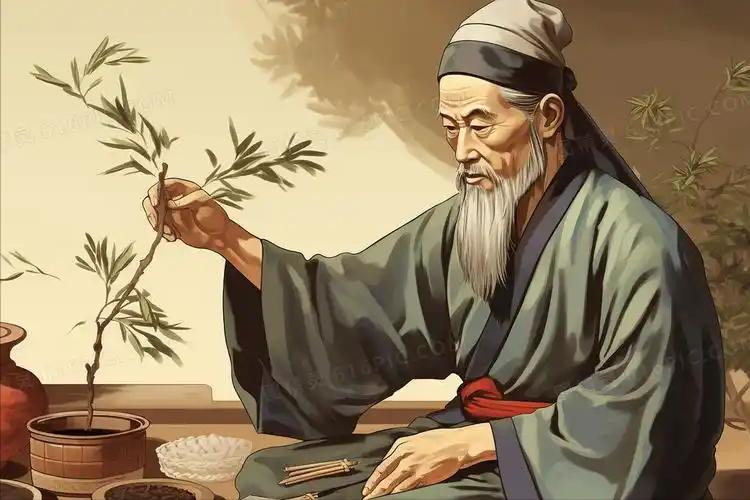
It should be noted that Sini Decoction has warm and drying properties and is primarily suitable for conditions of yang deficiency with excessive cold. It is not recommended for those exhibiting signs of yin deficiency or excess heat, such as dry mouth and throat, red tongue with yellow coating, or dry stool. Aconite is toxic and must undergo standardized processing, as well as being decocted for 0.5–1 hour to reduce toxicity. It is advised to use under the guidance of a physician for syndrome differentiation and not to self-administer indiscriminately.
In summary, traditional Chinese medicine emphasizes "treating the root cause of disease." Regulating the spleen and stomach should not focus solely on these organs themselves—for chronic cases of spleen-stomach deficiency and cold, one must consider the underlying deficiency of kidney yang. By warming and replenishing kidney yang, the fire at the *mingmen* (life gate) is revived, warming the spleen and restoring its transformative functions. As a classic warming-yang formula, *Sini Tang* embodies the TCM therapeutic wisdom of "replenishing the source of fire to dispel yin obstruction," providing a crucial approach to resolving stubborn spleen-stomach issues.
It should be noted that this article is for reference only. Specific medication should be taken under the guidance of a professional physician. Individual physique and conditions vary, so personalized diagnosis and treatment are necessary to achieve the best results.