Grasping Four Key Time Nodes for Optimal Seasonal Health with "Solar Term Moxibustion"
The Yellow Emperor's Inner Classic emphasizes that "harmonizing with the four seasons" forms the foundation of health preservation. The twenty-four solar terms in a year mark the transition nodes of yin-yang energy in nature. During each seasonal transition, weather changes prompt the human body to self-adjust for external adaptation, when resistance decreases and susceptibility to pathogenic factors increases. "Solar Term Moxibustion," embodying ancient wisdom, is a "temporal health preservation medicine" developed by our ancestors based on profound understanding of the "correspondence between heaven and human." It precisely targets these specific time windows, utilizing mugwort's unique pure-yang thermal properties to stimulate specific acupoints, achieving three core effects: reinforcing vital qi, clearing stagnation, and balancing yin-yang.
Solar Term Moxibustion doesn't require targeted moxa treatment at every solar term. The essential practice focuses on four critical seasonal nodes with intense energy transitions and significant health-preservation value: Winter Solstice, Spring Equinox, Autumn Equinox, and Summer Solstice.
Spring Equinox Moxibustion: Soothe Liver Qi and Promote Vitality
On the Spring Equinox, when day and night are of equal length, nature achieves a state of yin-yang balance. After this, the ascending tendency of yang qi becomes increasingly evident, ushering all things into a rapid growth phase. Spring health preservation emphasizes regulating liver qi to assist the rise of yang energy. As liver qi dominates upward movement during spring, moxibustion at this time follows the nature of the liver, dispersing potential stagnant qi accumulated during winter to ensure smooth qi circulation.
Key Acupoint Selection and Technique
Zusanli (ST36): Located four finger widths below the outer knee, beside the tibia's outer edge, it holds the reputation as the "primary health preservation acupoint." Moxibustion here strengthens spleen and stomach function while replenishing qi and blood, providing abundant energy for yang qi's springtime growth.
Taichong Acupoint (LR3): Located on the dorsum of the foot, in the depression between the 1st and 2nd metatarsal bones, it is renowned as the "anger-relieving point." Moxibustion on Taichong can effectively soothe liver qi stagnation, purge liver fire, and suppress excessive liver yang.
Hegu Acupoint (LI4): Positioned on the back of the hand at the highest point of the "tiger's mouth" (first web space). When paired with Taichong, they form the "Four Gates" combination, synergistically regulating systemic qi and blood circulation to alleviate springtime fatigue, headaches, and other discomforts.
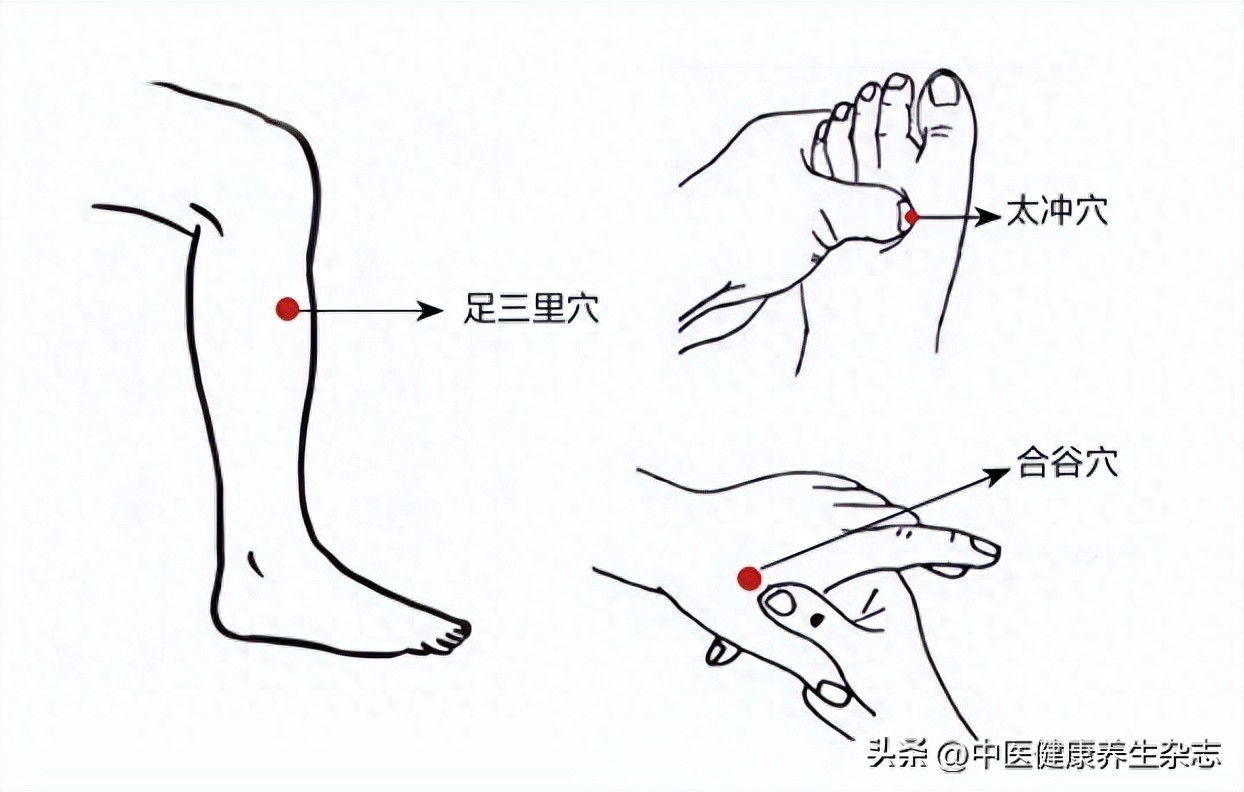
Key Application Guidelines: During the Spring Equinox (ideally the exact day or within 3 days before/after), perform moxibustion on Zusanli (ST36), Taichong (LR3), and Hegu (LI4). Either suspended moxibustion or small moxa boxes can be used. Apply for 15-20 minutes per point until achieving localized warmth and comfortable sensation.
Summer Solstice Moxibustion: Clears heart fire, protects yang energy, prevents summerheat, and eliminates dampness.
The summer solstice marks the longest day of the year, when yang energy reaches its peak. However, "yin energy begins to grow at the summer solstice," as yin quietly emerges during this time, characterized by a climate of high temperatures interwoven with humidity. For health preservation during this period, it's essential to clear heart fire and calm the mind, strengthen the spleen to dispel dampness, and carefully nurture the newly emerging yin energy. Remember that while preventing heatstroke and cooling down, one must guard against excessive indulgence in cold, such as overconsumption of icy drinks or prolonged exposure to air conditioning. During this season, excessive heart fire may lead to restlessness, insomnia, and mouth ulcers; profuse sweating can deplete qi and body fluids; excessive intake of cold foods or overly cold air conditioning may damage the spleen and stomach, causing diarrhea; while dampness obstruction may result in physical heaviness, fatigue, and loss of appetite.
Key Acupoint Selection and Techniques
Shenmen Acupoint (HT7): Located at the ulnar end of the wrist crease depression, this is the Yuan-source point of the Heart Meridian and a key acupoint for "nourishing the heart and calming the spirit". Moxibustion at Shenmen can clear heart fire and promote tranquil sleep
Guanyuan Point (CV4): Located 3 cun below the navel. To align with the "yin generation" mechanism, apply mild and gentle moxibustion for a relatively short duration (about 10 minutes) at this point. The purpose is to mildly reinforce yang energy, strengthening the foundation without provoking internal heat
Yinlingquan (SP 9) point: Located in the depression posterior and inferior to the medial condyle of the tibia. When paired with Zusanli (ST 36) point, they are known as the "twin stars for dispelling dampness." Moxibustion on this point can strengthen the spleen and replenish qi, promoting diuresis and eliminating dampness.
Dazhui (GV 14) point: Situated in the depression below the spinous process of the seventh cervical vertebra, known as the "convergence of all yang" and considered the "master switch" of the body's yang energy. Moxibustion on Dazhui with mild heat can invigorate the body's yang qi—particularly suitable for those who experience cold sensations in their back after prolonged exposure to air-conditioned environments.
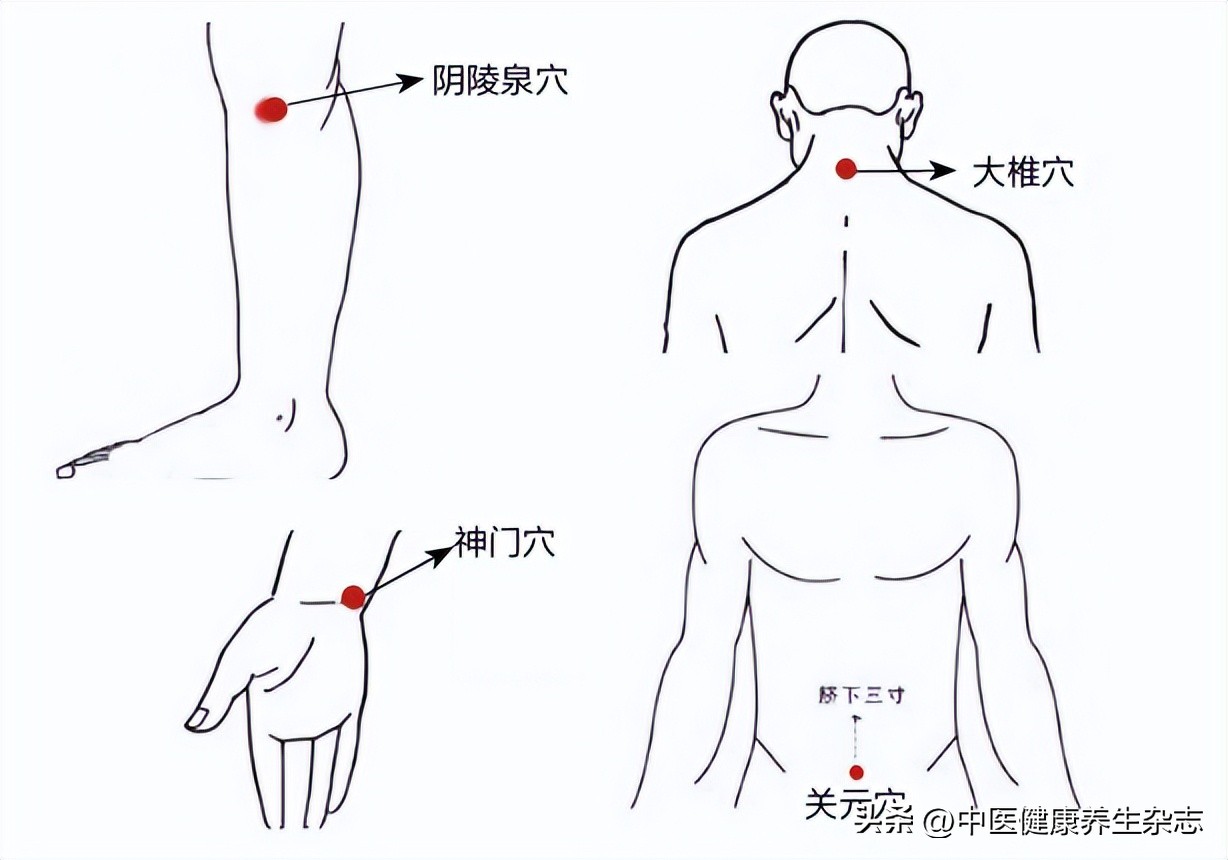
Key operational points: Perform moxibustion on the summer solstice day or within three days before or after. Apply suspended moxibustion at Shenmen (HT 7) and Yinlingquan (SP 9) points, while using moxa boxes at Guanyuan (RN 4), Zusanli (ST 36), and Dazhui (GV 14) points. The moxibustion dose should be moderate—about 15 minutes per point—and avoid excessive sweating during or after the procedure to prevent excessive consumption of body fluids and qi.
Autumnal equinox moxibustion: Moistens the lungs and strengthens defenses, corresponding to the autumn harvest principle.
Autumnal Equinox marks another day of equal day and night, representing the balance of yin and yang in nature. Thereafter, yin energy gradually increases while yang energy recedes, with all things entering a state of conservation. The most notable climatic characteristic is dryness. Autumn health preservation focuses on nourishing the lungs and yin, strengthening the spleen and replenishing qi. It requires aligning with autumn's intrinsic qualities of convergence and descent, protecting lung-defensive qi, and preventing dryness-pathogen from damaging lung fluids.
Zusanli (ST36) Acupoint: Strengthens the spleen and stomach to nourish qi and blood, which can then ascend to nourish the lungs. This embodies the principle of "cultivating earth to generate metal," forming the foundation for lung nourishment in autumn.
Feishu (BL13) Acupoint: Located on the back, approximately 2 finger-widths lateral to the lower border of the 3rd thoracic vertebra spinous process. Moxibustion at this point warms and tonifies lung qi, enhances the body's ability to resist external cold, improves defensive qi function, and effectively prevents dry cough and wind-cold common cold.
Zhongwan (CV12) Acupoint: Located 4 cun (about 6 finger-widths) above the navel, positioned over the stomach. Moxibustion here warms the middle burner and harmonizes the stomach, disperses cold to relieve pain, and prevents epigastric discomfort caused by cold conditions.
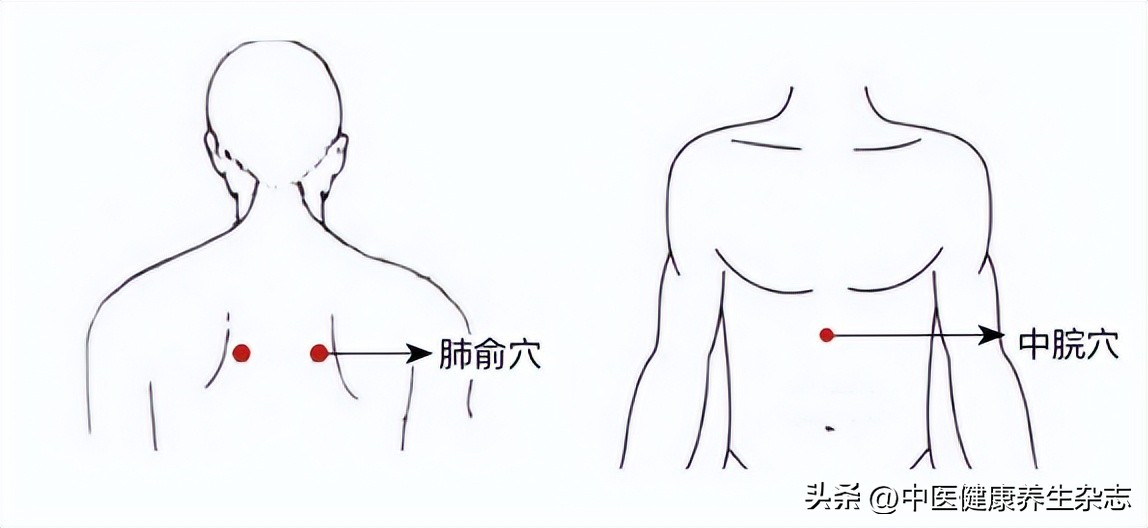
Key points of operation: Administer moxibustion on the Autumnal Equinox or within 3 days before or after. For Zusanli (ST36) and Zhongwan (CV12) acupoints, use suspended moxibustion or moxa boxes; Feishu (BL13) acupoint is located on the back and is best treated with moxa boxes or moxa patches. Apply to each acupoint for 15-20 minutes, maintaining a warm and comfortable sensation
Winter Solstice Moxibustion: Strengthening the Foundation and Awaiting Spring Growth
The Winter Solstice marks the day with the longest night and shortest daylight. "As yang energy begins to grow from this day," the earth's yang qi quietly stirs deep underground. During this health preservation period, the focus lies in warming kidney yang and strengthening foundational qi—much like burying deeper roots for trees—by harnessing seasonal energy to store vitality within the body, laying solid groundwork for vigorous yang growth in spring. However, severe cold pathogens most easily deplete kidney yang, often manifesting as cold intolerance, icy extremities, lumbar/knee weakness, fatigue, frequent colds, and aggravated chronic conditions like arthritis. (The translation preserves TCM concepts like "阳气/yang qi" and "肾阳/kidney yang" while adapting seasonal metaphors for natural fluency. It maintains medical accuracy for symptoms like "腰膝酸软/lumbar/knee weakness" and clinical terms such as "关节炎/arthritis." The concise rendering of "节气灸/seasonal energy" implicitly carries the moxibustion context without disrupting flow.)
Guanyuan (CV4): Located 3 cun below the navel, approximately 4 finger-widths. Moxibustion at this point can greatly tonify primordial qi and warm kidney yang.
Shenque (CV8): Located at the umbilicus. Gentle moxibustion on Shenque can warm and unblock yang qi throughout the body, invigorate spleen yang, regulate stomach qi, and promote the generation of qi and blood.
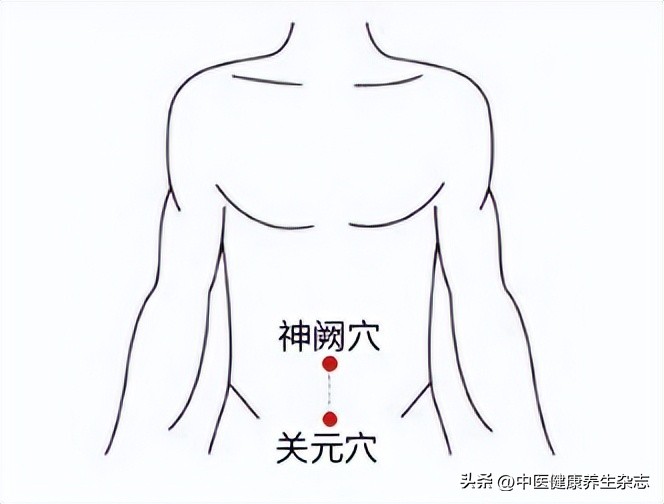
Key Operation Points: The optimal time for moxibustion is on the Winter Solstice day or within 3 days before/after. Use moxibustion boxes or portable moxibustion devices to cover the Guanyuan (CV4) and Shenque (CV8) acupoints, or apply mild suspended moxibustion (with the burning end of moxa stick 2-3 cm from the skin). Apply moxibustion for 20-30 minutes per acupoint until the local skin shows slight redness, while carefully preventing burns