Master 4 Movements to Regulate 4 Types of Insomnia
Long-term insomnia can easily lead to memory decline and may induce complications such as headaches and cognitive impairment, severely impacting patients' studies, daily life, and work. But how can you tell whether you are experiencing occasional physiological insomnia or suffering from chronic insomnia? You can refer to and compare with the "indicators" of TCM-assisted diagnosis, as shown in the table below.
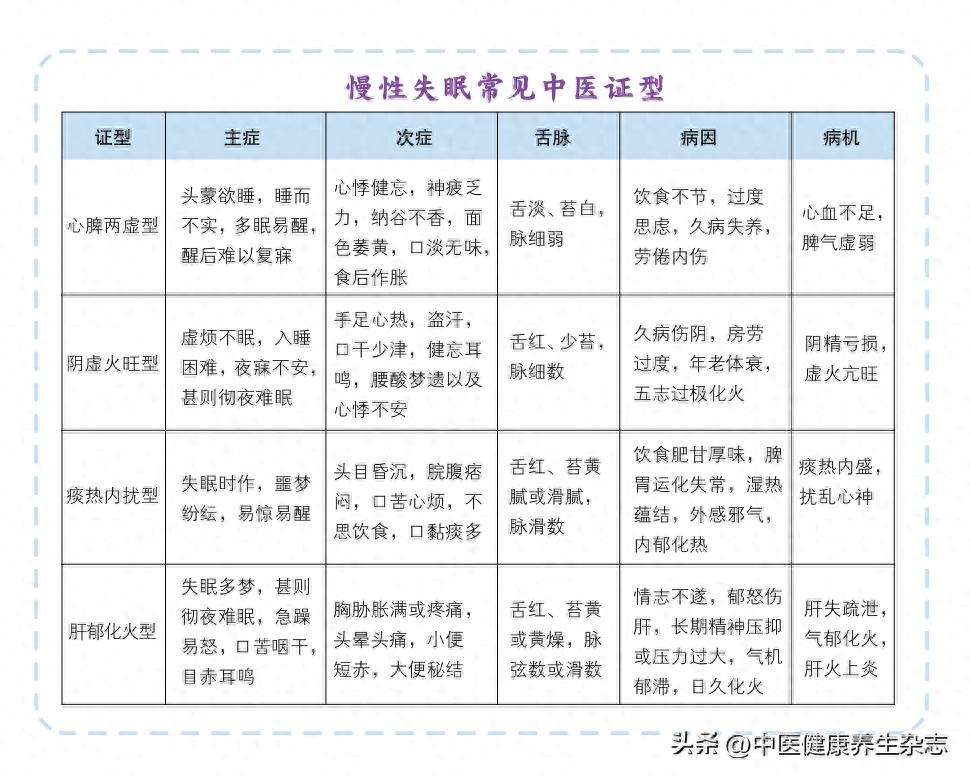
Traditional Chinese Medicine (TCM) always adheres to the core principles of "holistic concept" and "treatment based on syndrome differentiation" in treating insomnia. It views insomnia not merely as a sleep issue but as an external manifestation of internal imbalances in yin and yang, qi and blood, and dysfunction of the zang-fu organs. In clinical practice, TCM does not rely on a uniform "sleeping pill prescription." Instead, it employs the four diagnostic methods—inspection, listening and smelling, inquiry, and palpation—to accurately assess the patient's constitution and syndrome type. Treatment is then administered using various therapies such as herbal medicine, acupuncture, tuina massage, moxibustion, and auricular acupressure.
For patients, self-assessment of TCM syndrome patterns should be objective and avoid missing the essence while pursuing the trivial. Analyze based on daily habits and symptoms rather than categorizing oneself into a specific syndrome due to a single symptom. Besides following medical treatment, actively adjust lifestyle habits to improve insomnia symptoms. Practicing Daoyin exercises is one of the effective methods.
Daoyin exercises for four types of insomnia
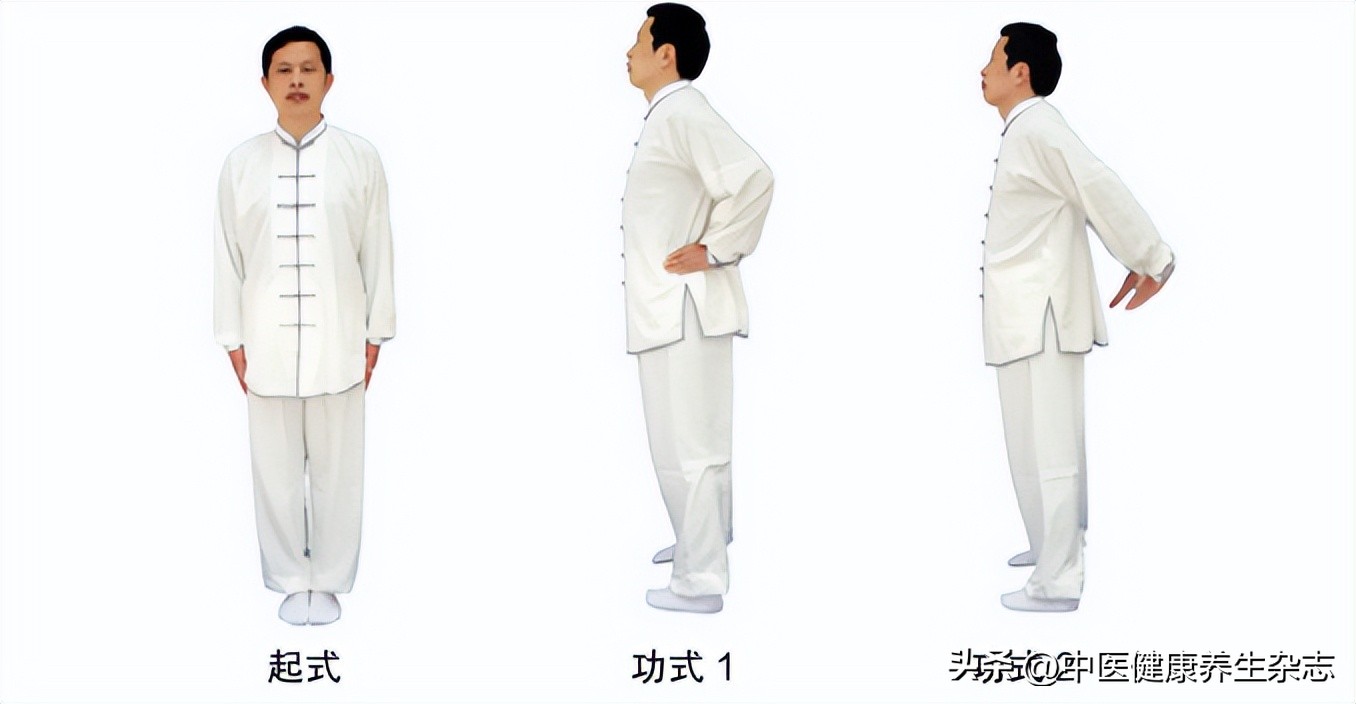
Insomnia due to deficiency of both heart and spleen - Standing Pile Posture
Starting posture: Stand with feet together, head slightly bowed as if supporting a heavy object, eyes looking straight ahead, mouth slightly open with tongue touching the upper palate, chin slightly drawn in. Maintain a relaxed chest and straight back, contracted abdomen with tucked-in buttocks and erect waist. Let arms hang naturally at sides with fingers together and slightly bent, middle fingers close to trouser seams. Keep body upright with calm mind and steady breathing.
Posture: Step the left foot sideways to the left, keeping the feet slightly wider than shoulder-width apart, toes slightly turned inward in a "八" shape, heels firmly planted, toes gripping the ground, and legs forcefully adducted. Place both hands on the waist with the thumbs pressing on the "Shenshu" acupoints (BL23), elbows tightly closed, and chest slightly lifted. Extend both hands backward, fully stretching the elbows and wrists, fingers together with thumbs abducted, arms extended 30° backward. Keep the head still without looking around, maintaining focus.
Closing posture: Return both hands to the waist, relax the lower limbs, then relax the upper limbs, and return the body to the starting position.
Insomnia due to Yin deficiency with internal heat – "Moon Scooping from the Sea Bottom" technique
Starting posture: Assume the "suspended crotch stance" (left foot stepping wide to the left in a semi-squat position), place both hands on the thighs with palms pressing downward. Bend the elbows with palms facing upward near the ribs, thumbs pointing outward, fingers together, and the "tiger’s mouth" (space between thumb and index finger) open.
Movement Technique: Exhale forcefully while gathering strength in the fingers and palms, forcefully extending the thumbs; slowly lift both palms upward until they reach chest level with arms extended and externally rotated, continuing to rotate while raising them overhead until the fingers face each other with palms diagonally upward and elbows fully extended; focus the gaze with concentrated intention while maintaining natural breathing. Exhale forcefully while gathering strength in the fingers and palms, opening the tiger's mouth (thumb-web space); gradually apply strength to extend both arms outward to the sides while bending at the waist; internally rotate the forearms to exert force along the ulnar edge of the palms until the palms stack together, then extend the waist and bend the knees while slowly raising both hands upward, finally placing both palms at the waist area.
Closing Form: Place both hands on the thighs before returning to the original stance.

Insomnia due to Phlegm-Heat Disturbance — Heaven-Supporting Earth-Embracing Technique
Starting Position: Assume a closed stance (toes turned inward in a pigeon-toed position) with both hands extended backward, elbows and wrists straight, fingers held together except for the extended thumbs, arms angled 30° backward; bend the elbows to place supinated palms at both flanks with fingers separated from thumbs.
Movement: Speak with exertion, keep fingers and palms taut, forcefully stretch the four fingers and thumb apart; slowly raise both palms upward, extending the wrists at chest level and spreading the arms outward while lifting, pushing overhead until the four fingers face each other with palms upward and elbows fully extended; keep the eyes alert, focus the mind, and breathe naturally; exert force when exhaling, gathering strength in the fingers and palms, widening the thumb-forefinger gap; apply force with both palms and slowly spread the arms outward to shoulder level, then simultaneously bend the upper body forward as the palms gradually close together. Gradually straighten the waist while exerting force as if holding a heavy object, bend the elbows to separate the palms, then turn them upward and rest them at both sides of the waist
Closing posture: Extend both hands backward, then return to the original stance.

Insomnia due to liver qi stagnation transforming into fire – Splitting Mount Hua with Force
Starting posture: Assume a horse-riding stance (left foot steps wide to the left, with a distance between feet equal to three times one's foot length, toes slightly turned inward forming an inward "V"). Bend elbows and cross both hands in front of chest with palms vertically aligned.
Movement technique: Exhale with force, focusing energy in fingers and palms; slowly push the vertical palms apart to both sides. Relax shoulders, keep four fingers together with thumbs extended backward, palms facing forward, striving to maintain a horizontal line; chop forcefully with both hands simultaneously in up-down motions. Keep head steady without tilting or shaking, maintain alert eyes with concentrated focus, and breathe naturally. After the final chopping motion, withdraw palms upward to rest at waist level.
Closing posture: Turn upward-facing palms downward to press; place both hands on thighs and return to original stance.